Forecasting crime for strategic crime analysis: a comparison of methods
Matt Ashby
UCL Department of Security and Crime Science
What forecasting is not
Predictive policing: micro geographies, hours/days into future
Horizon scanning: macro/no geographies, (many) years into future
Forecasting: meso/macro geographies, weeks/months/(a few) years into future
Forecasting questions
- How many crimes are likely to occur in a city each month for the next three years? (Scenario 1)
- How many crimes are likely to occur each day for the next three months? (Scenario 2)
- How many aggravated assaults are likely to occur in a district each month for the next year? (Scenario 3)
Research questions
- Is it possible to forecast accurately the future frequency of crime?
- If so, which methods are most accurate?
- How much data do we need for accurate forecasting?
- How far into the future can we forecast?
Crime analysts:
- must master lots of skills
- have limited time
- have limited software access
⇒ semi-automatic forecasting
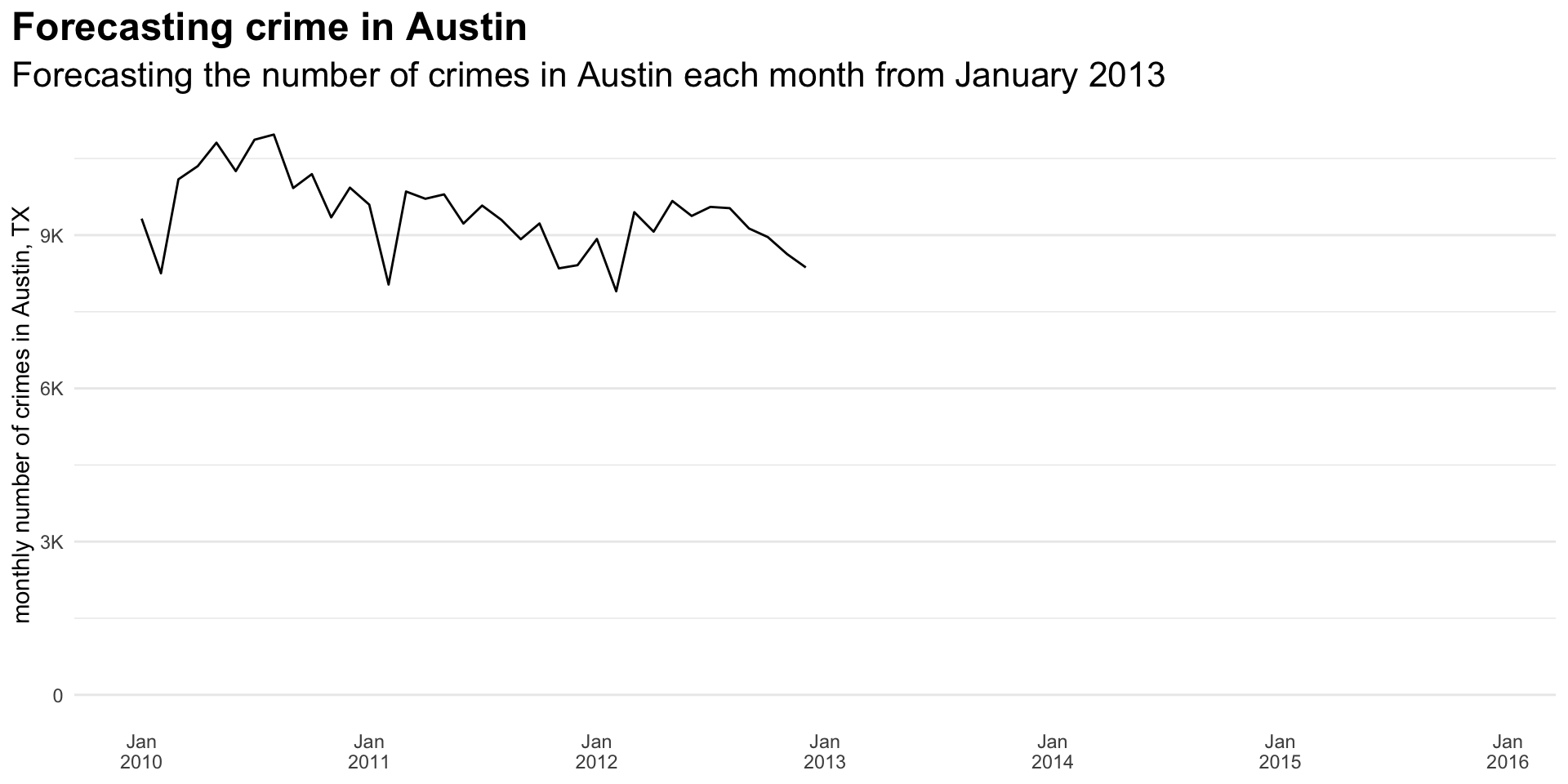
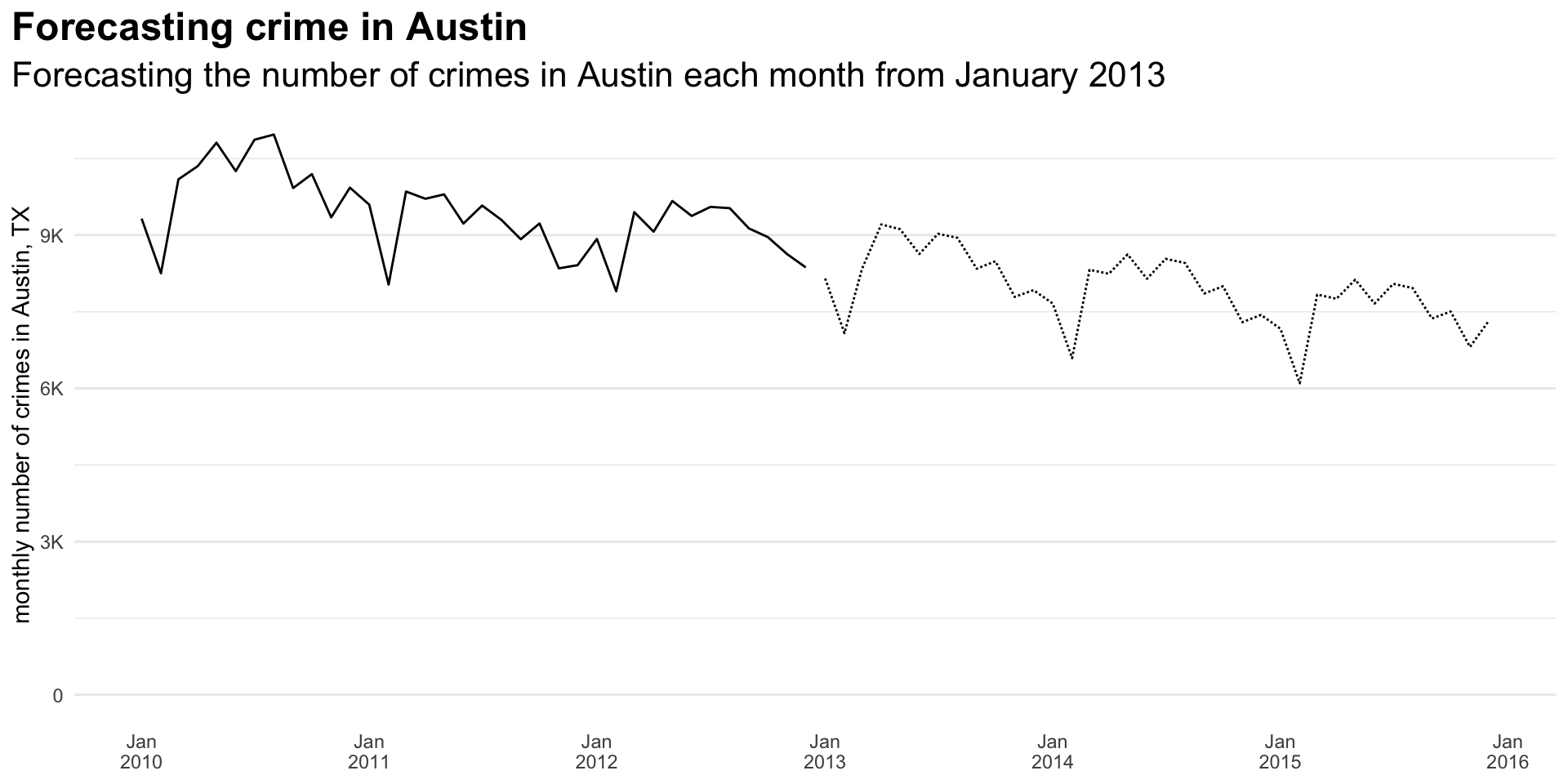
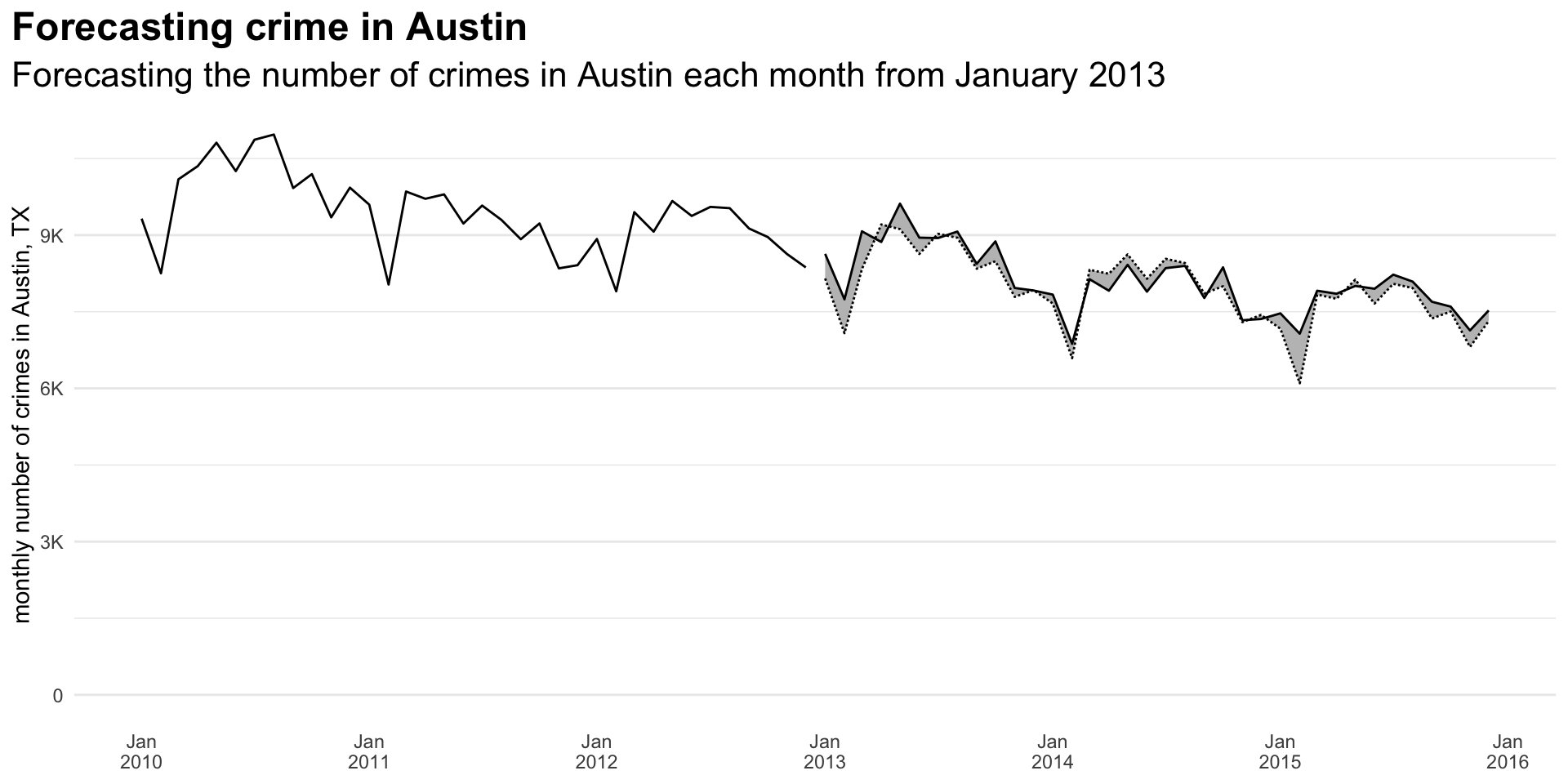
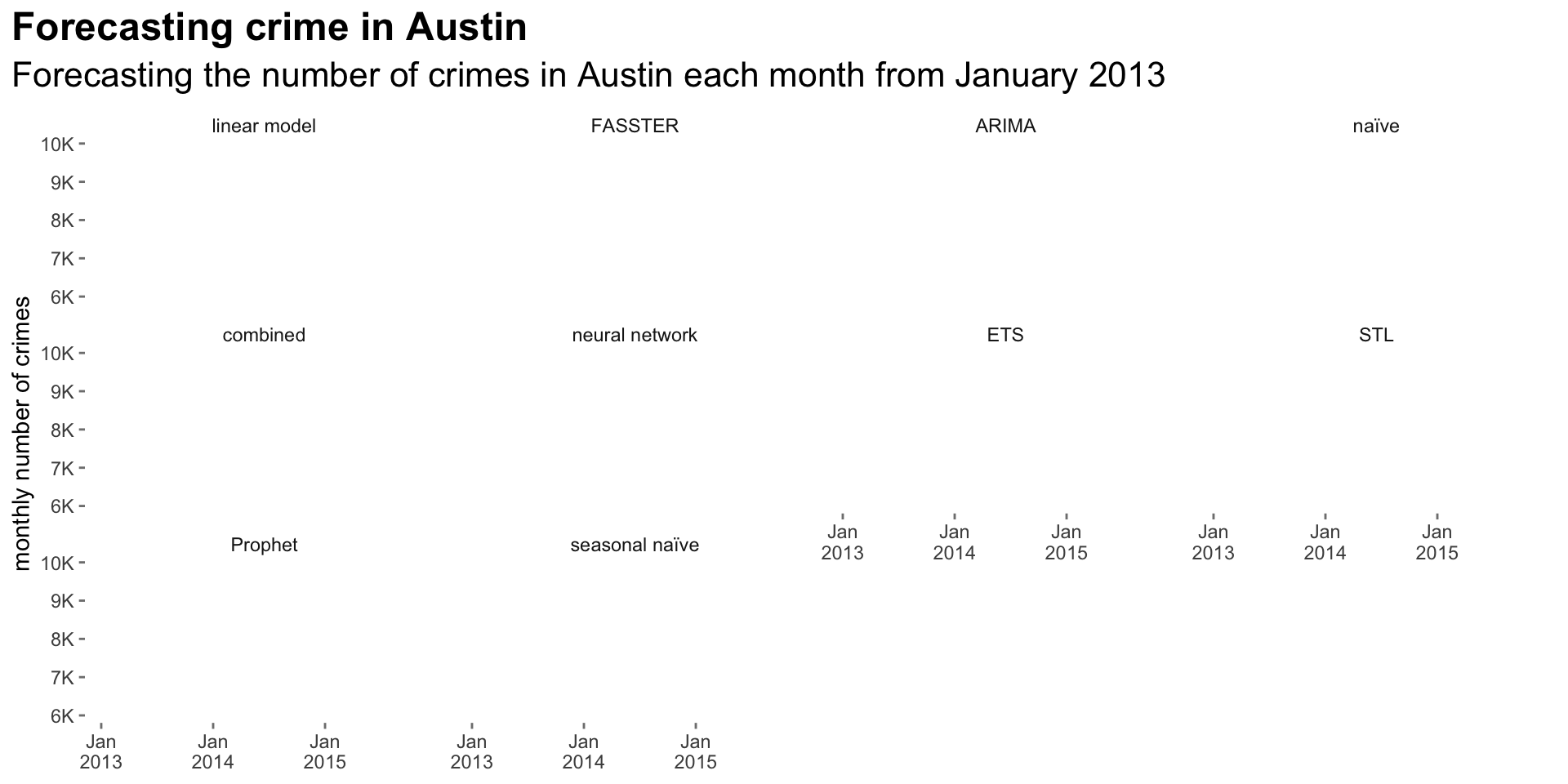
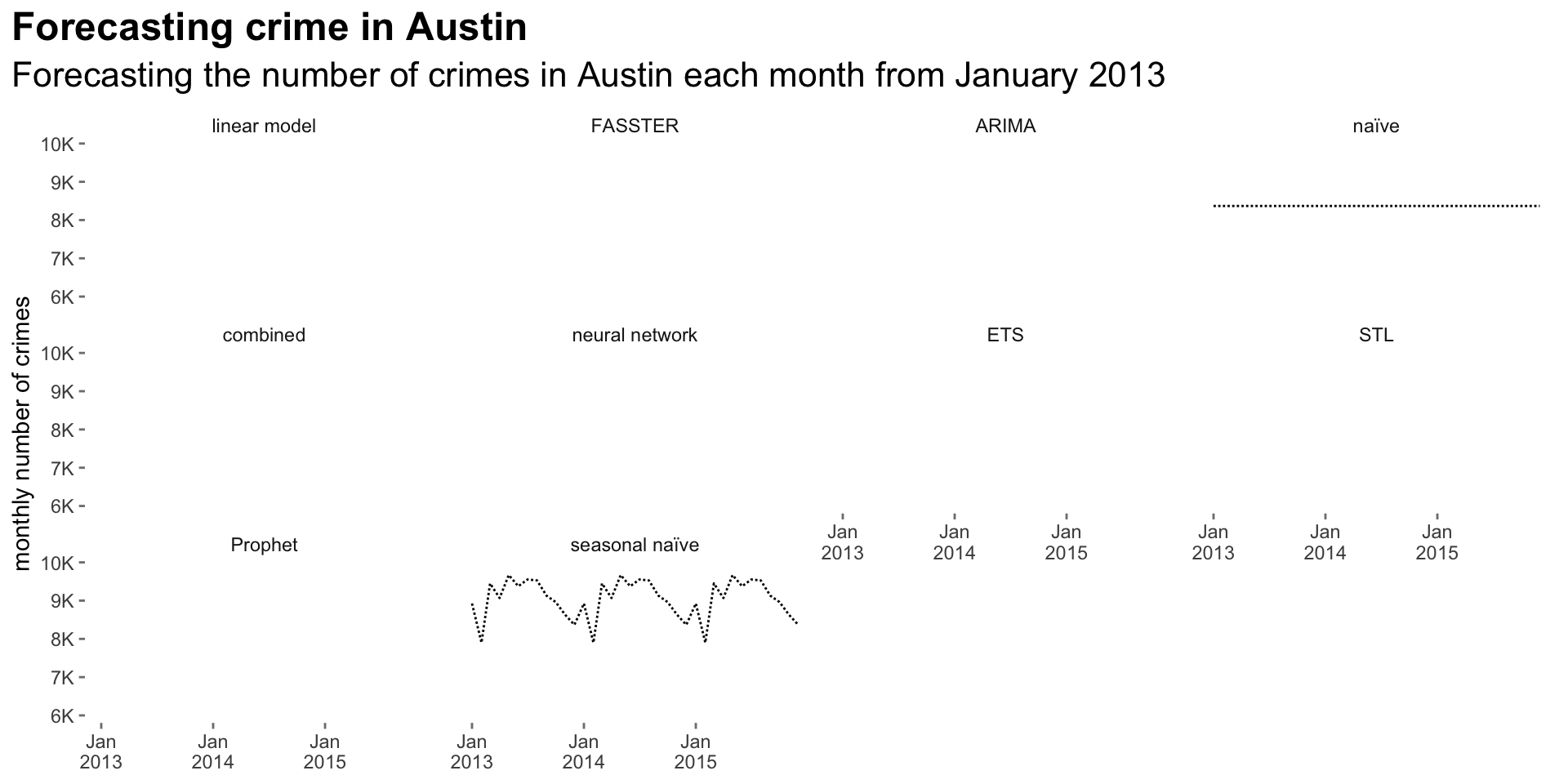
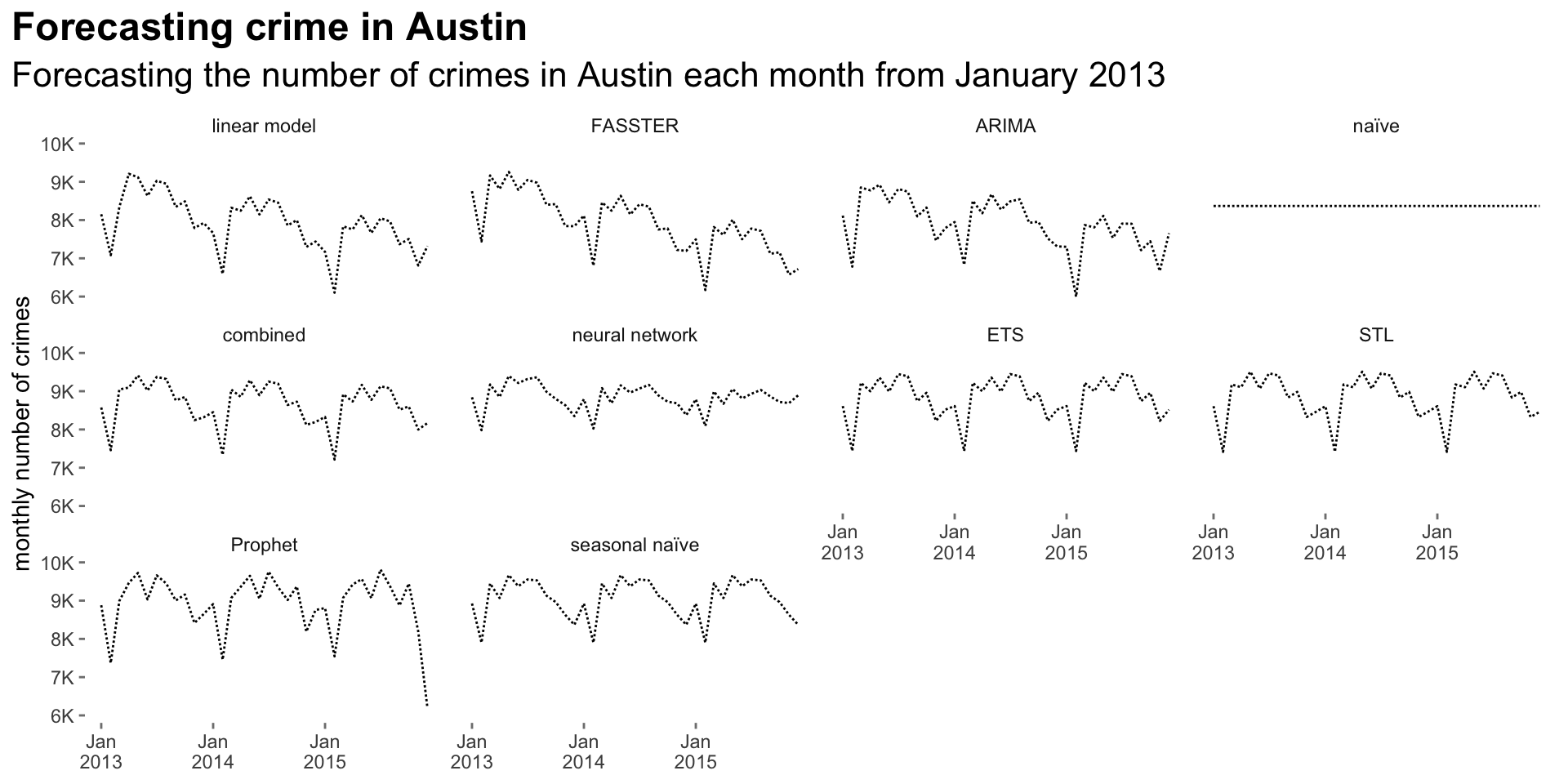
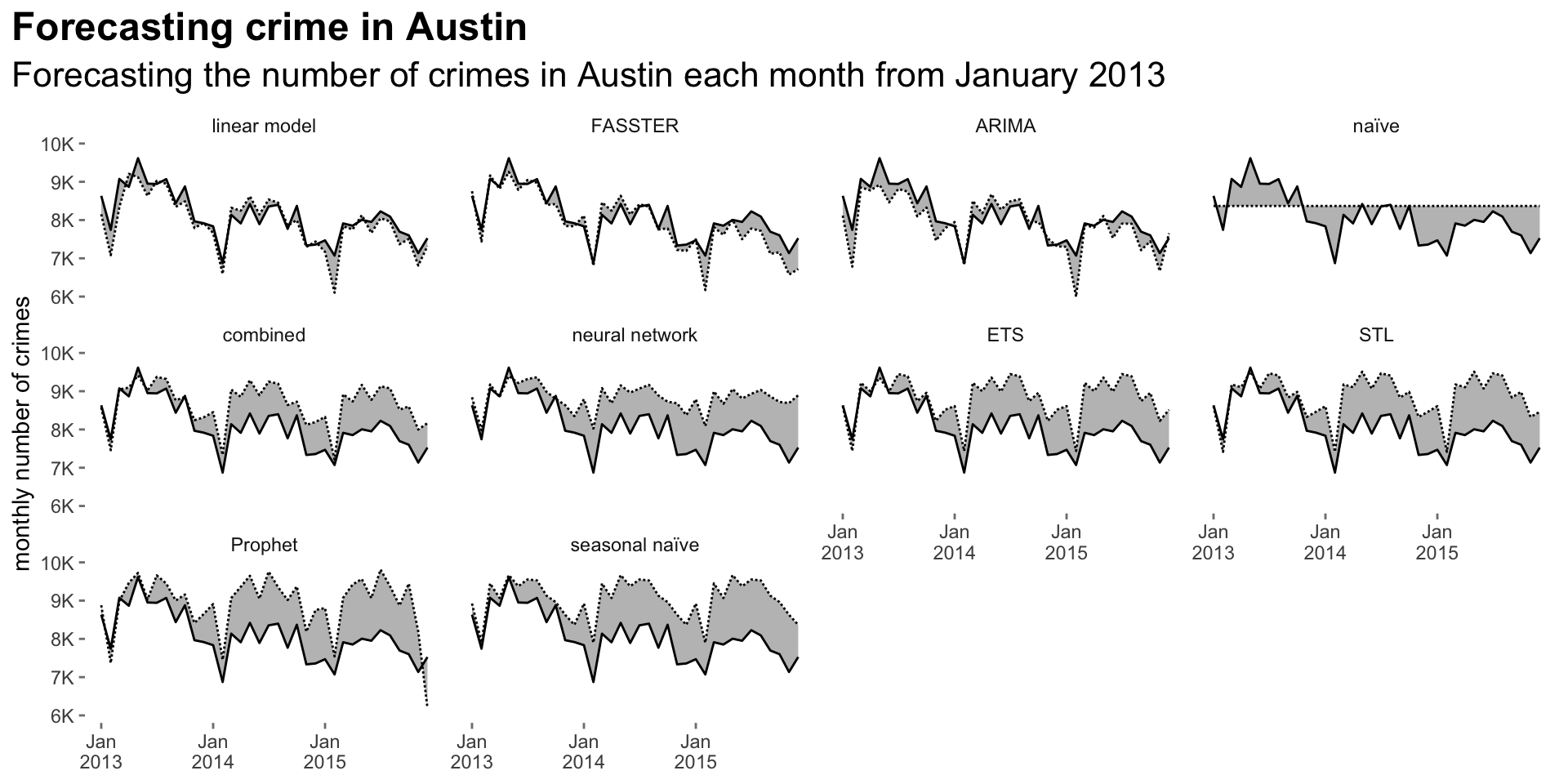
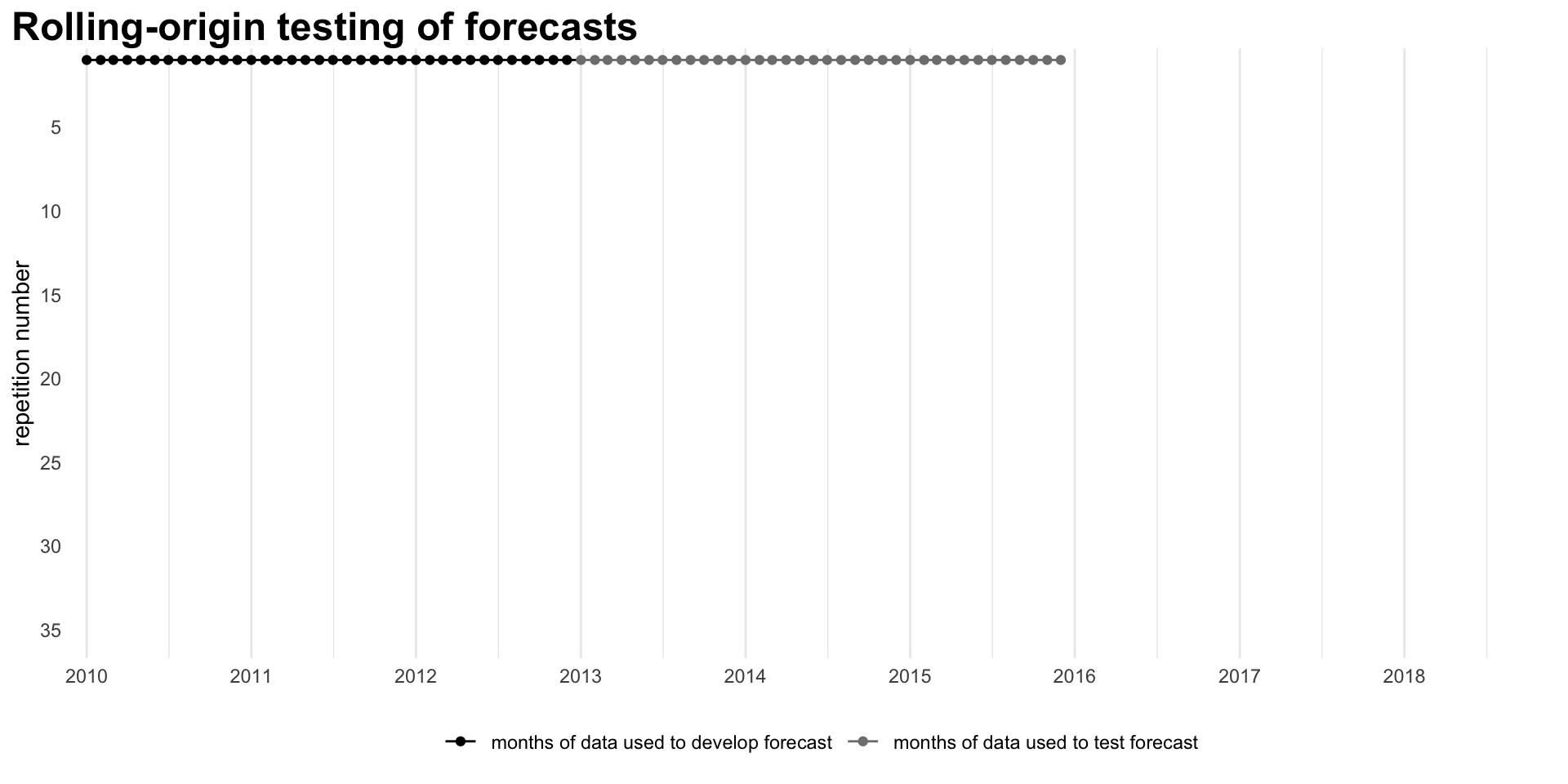
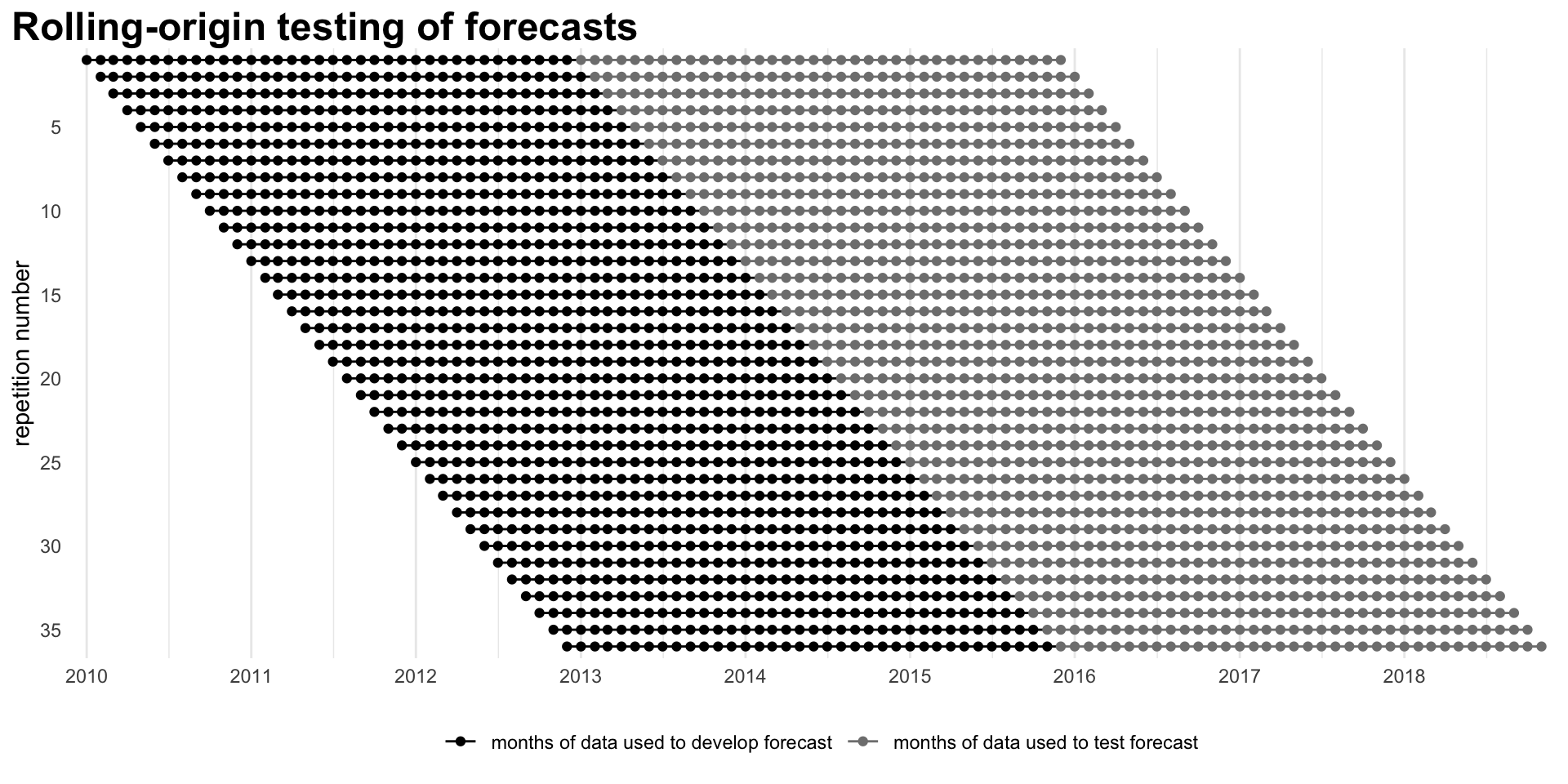
\[ \text{weighted average percentage error} = \frac{\sum |\text{actual} - \text{forecast}|}{\sum\text{actual}} \]
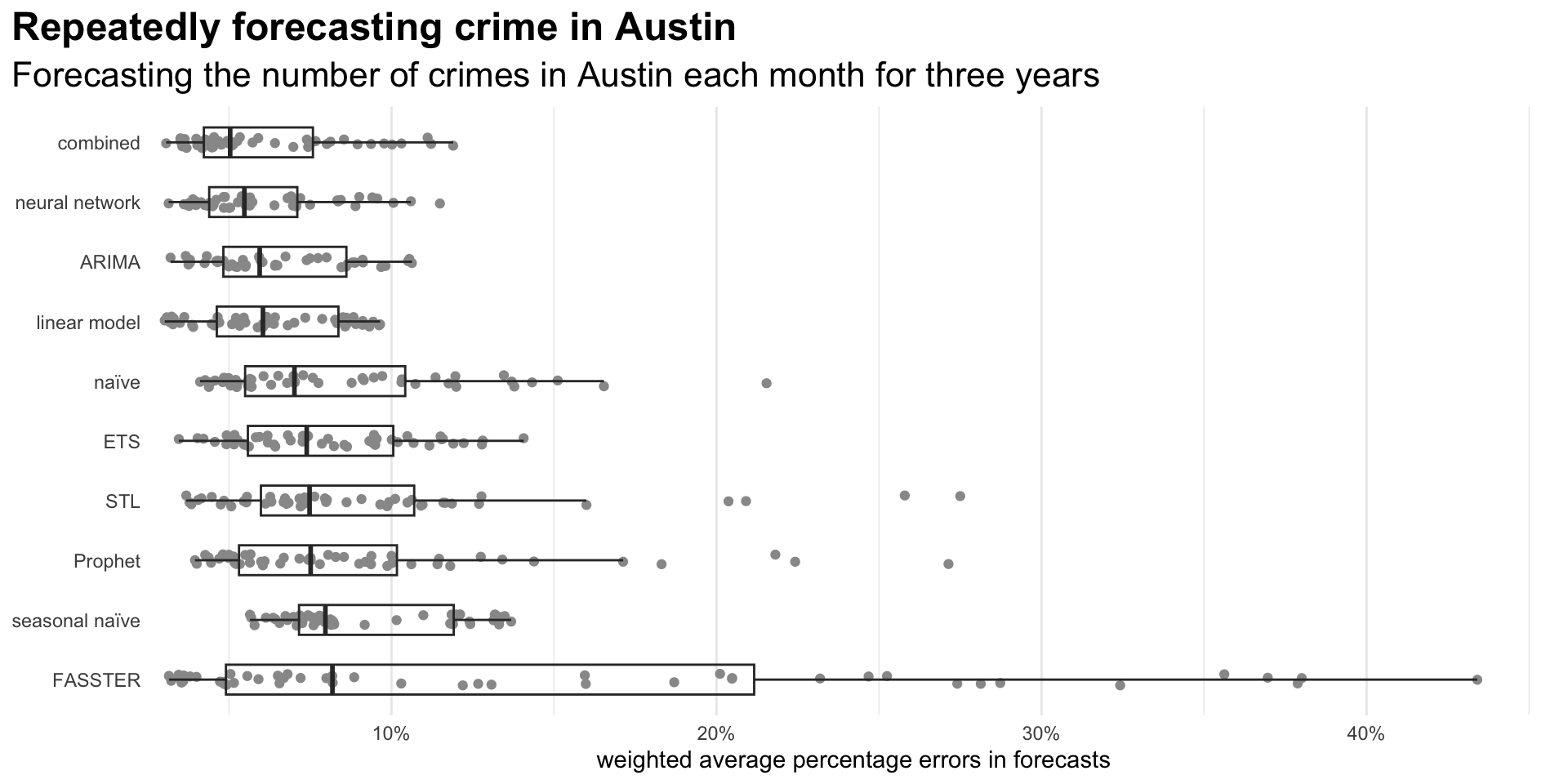
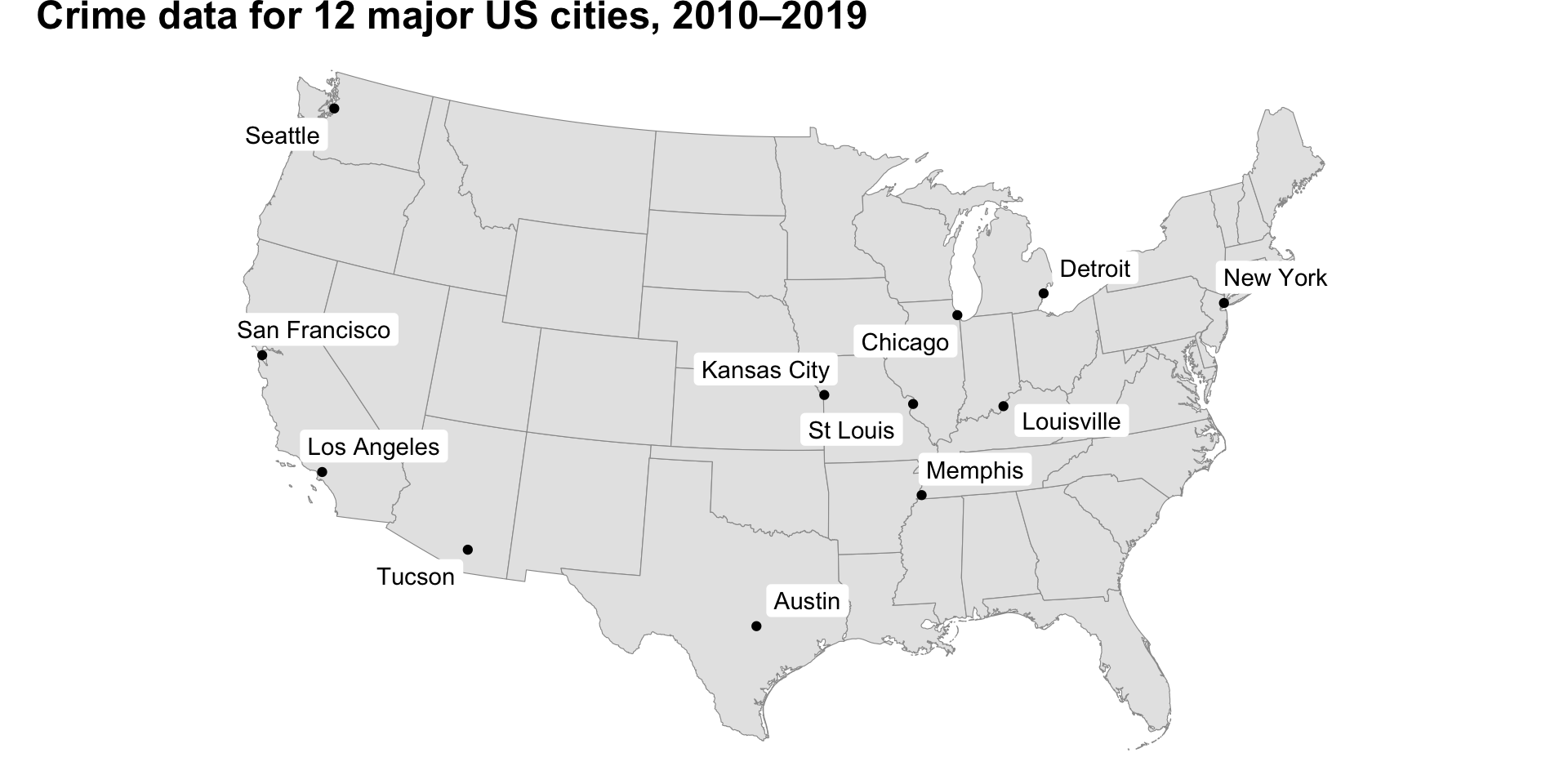
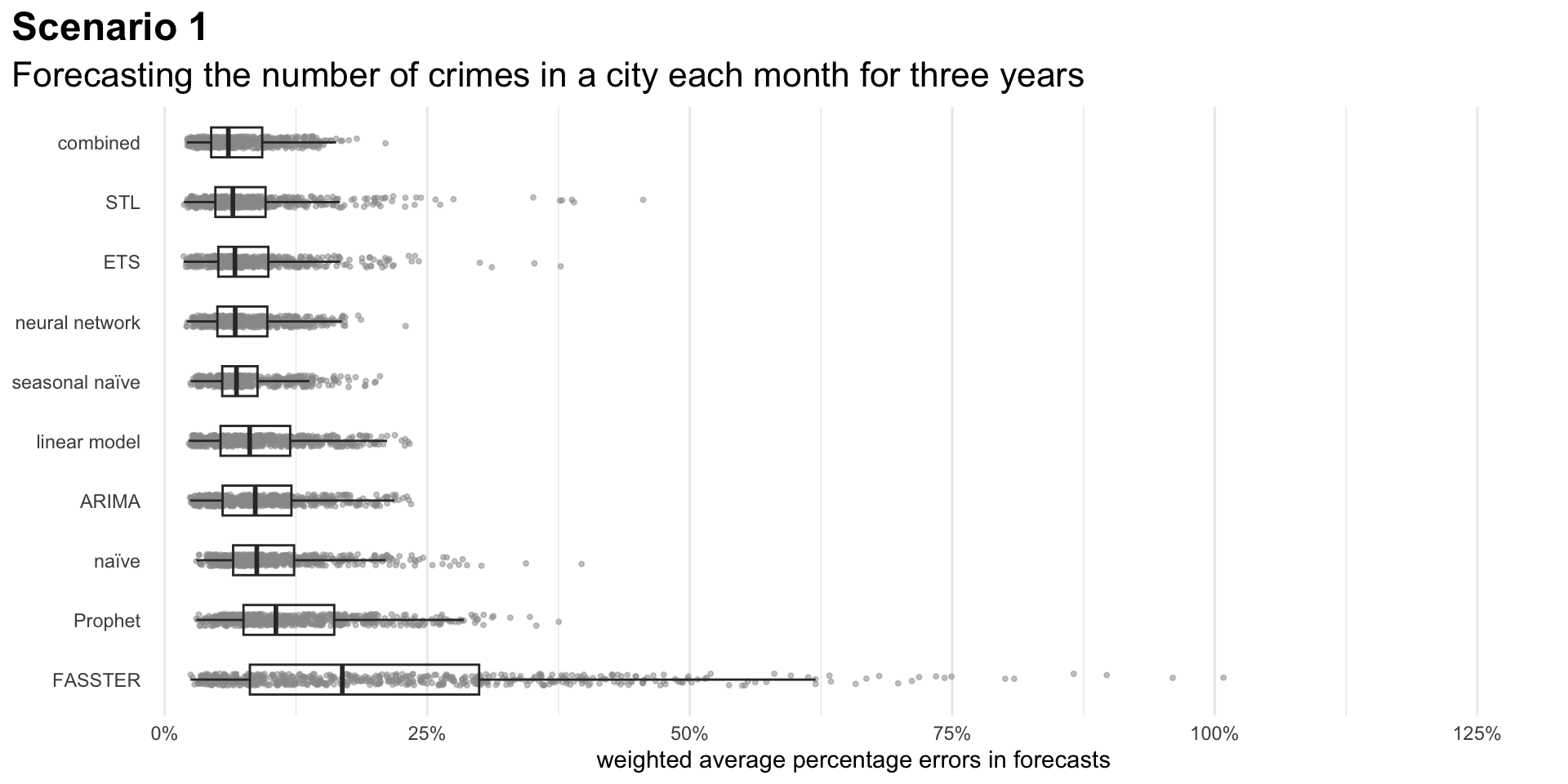
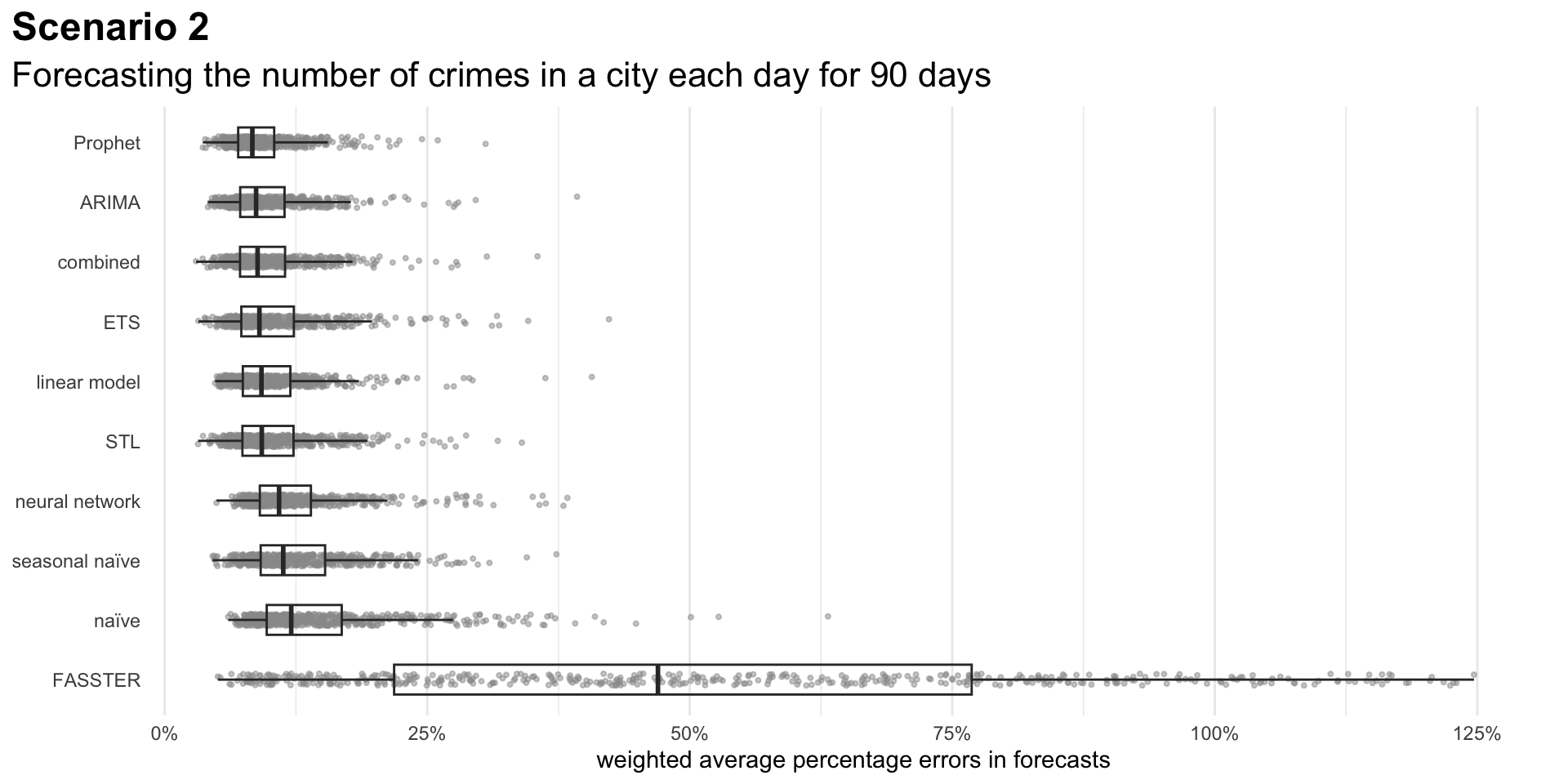
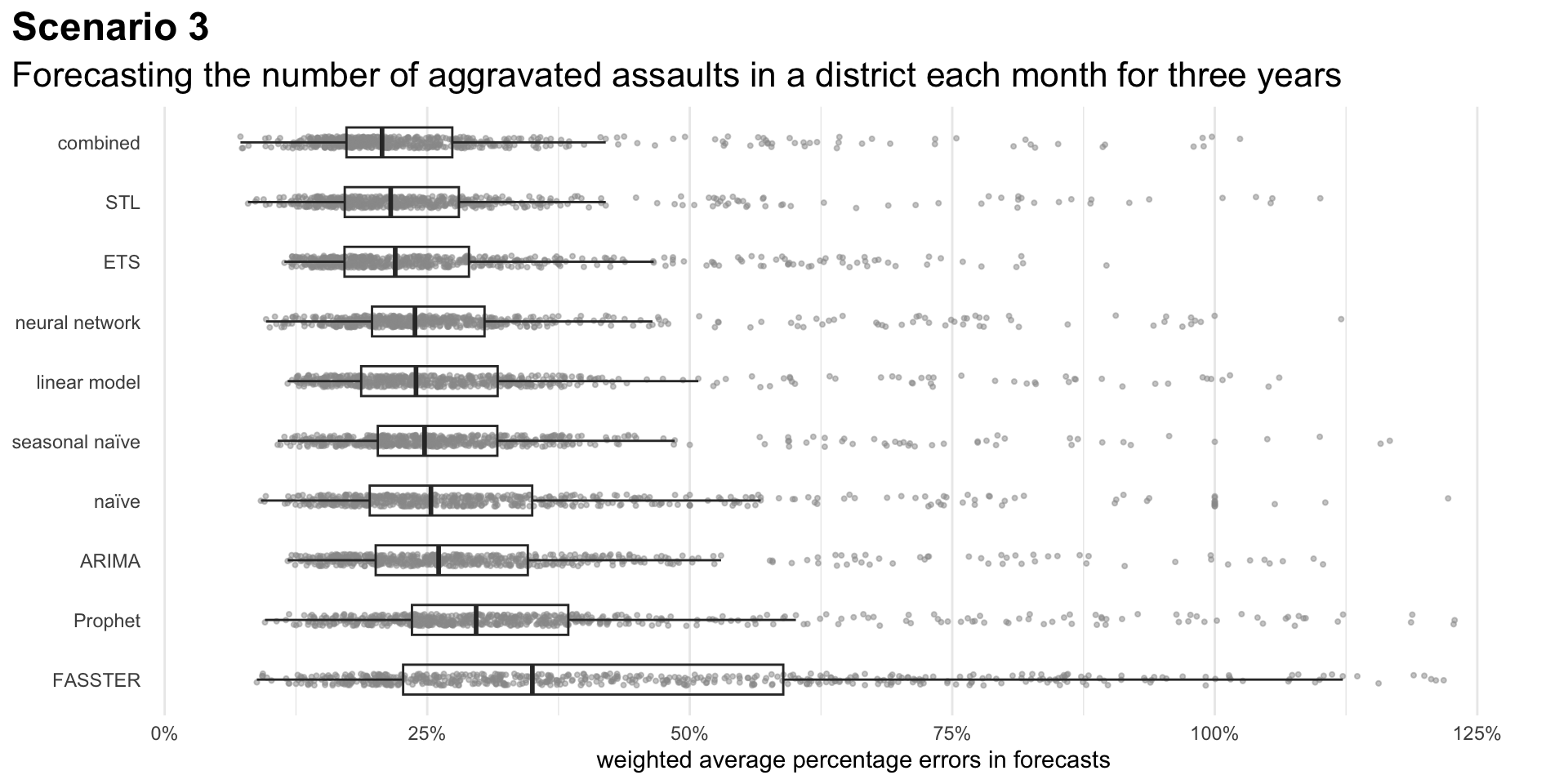
- Reasonably accurate forecasting is possible in some circumstances
- The combined method is typically the most accurate
- Some specific methods (e.g. FASSTER) are wildly inaccurate
These slides: lesscrime.info/talk/ecca-2023
Questions: matthew.ashby@ucl.ac.uk