Time-series forecasting for strategic analysis
What forecasting is (and isn’t)
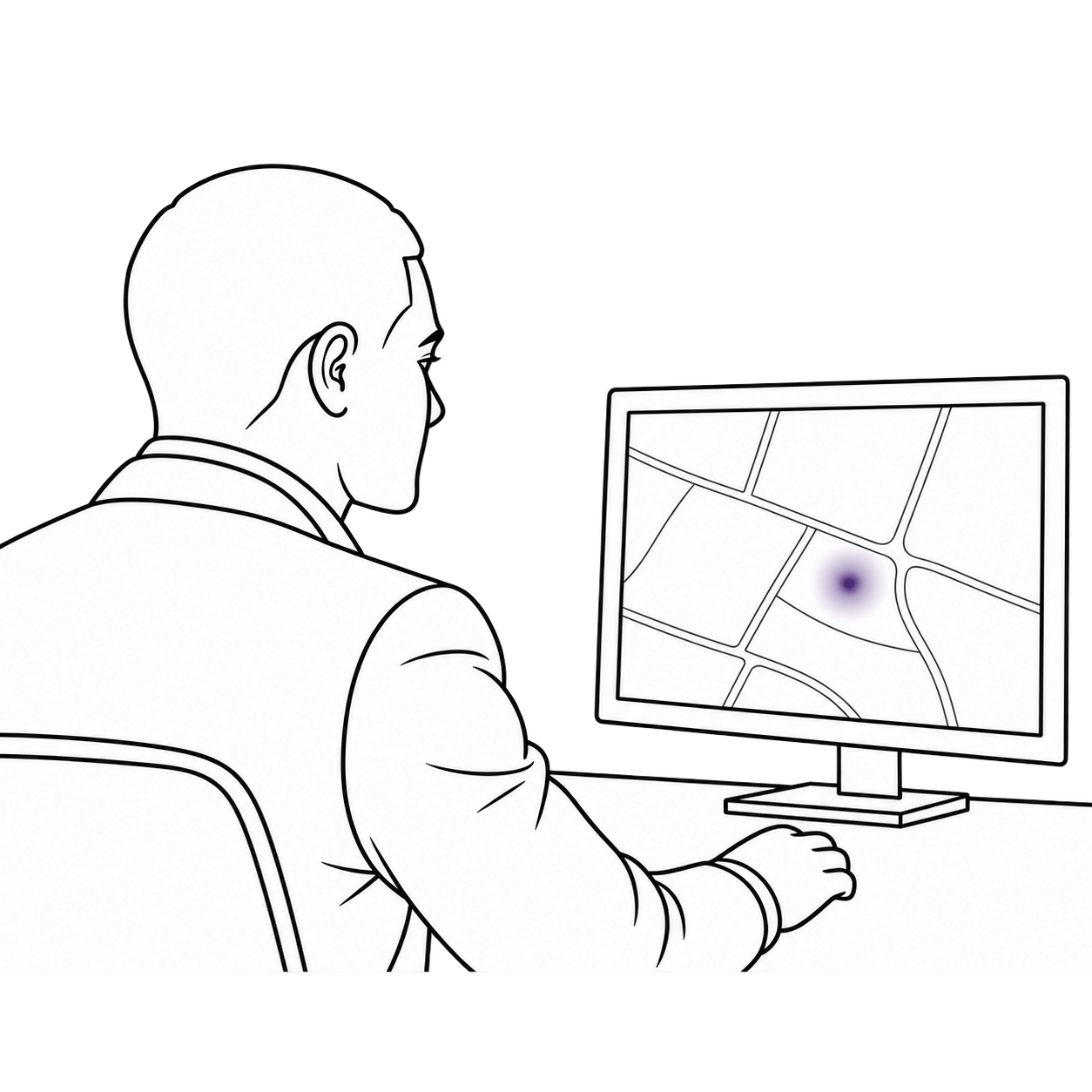
Predictive policing
streets
hours/days into future
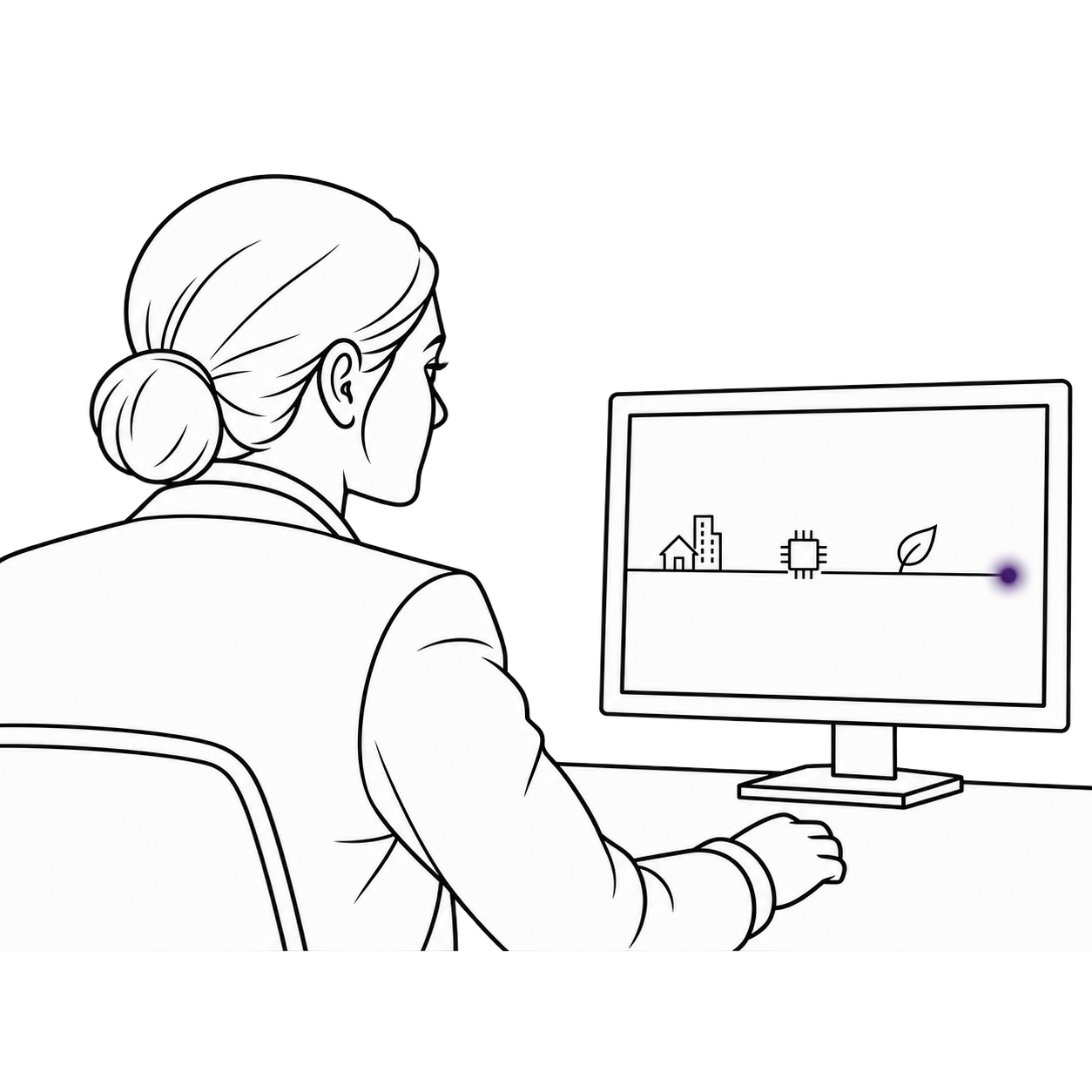
Horizon scanning
national/international
(many) years into future
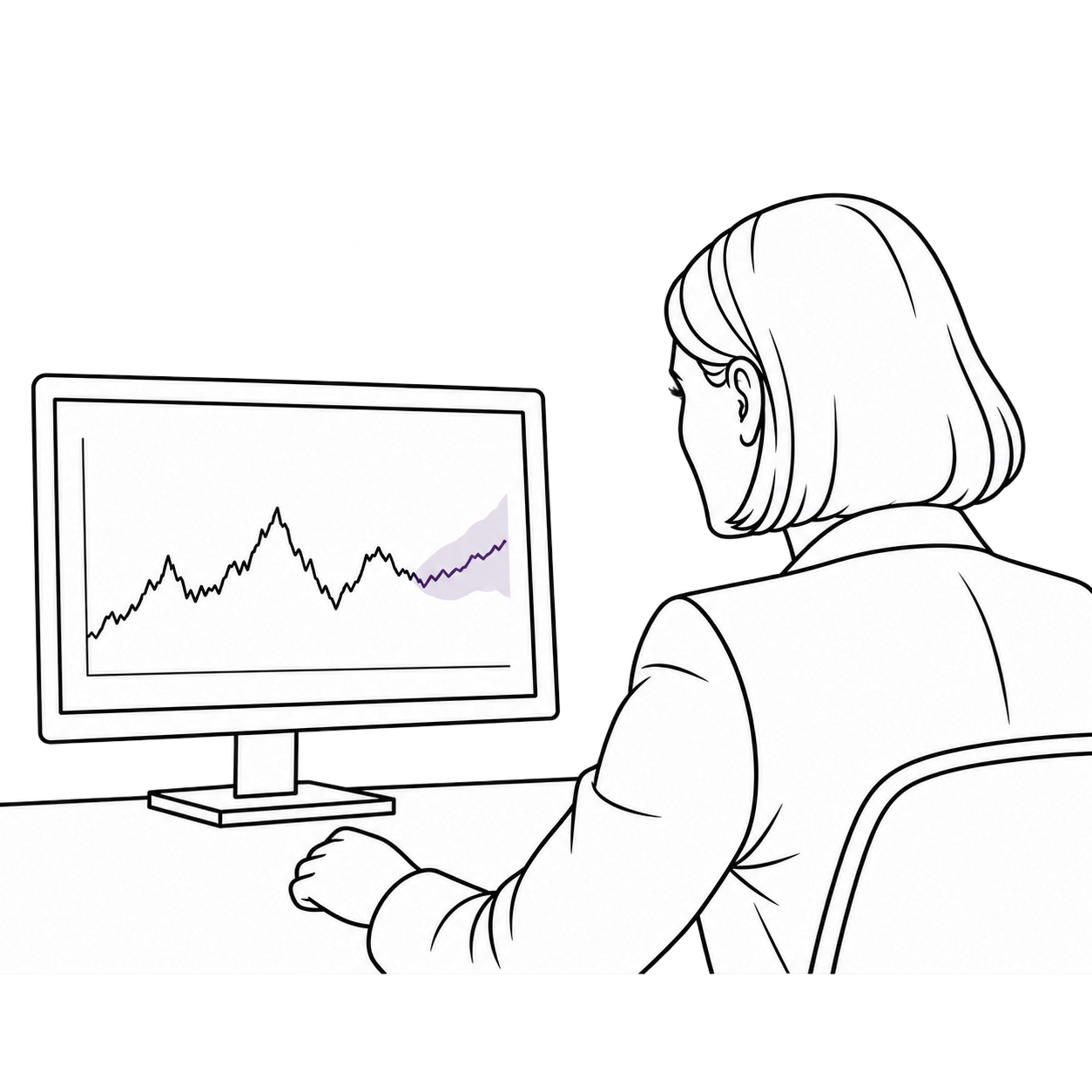
Crime forecasting
national/force/district
weeks/months/(a few) years into future
Forecasting uses data on the frequency of events …
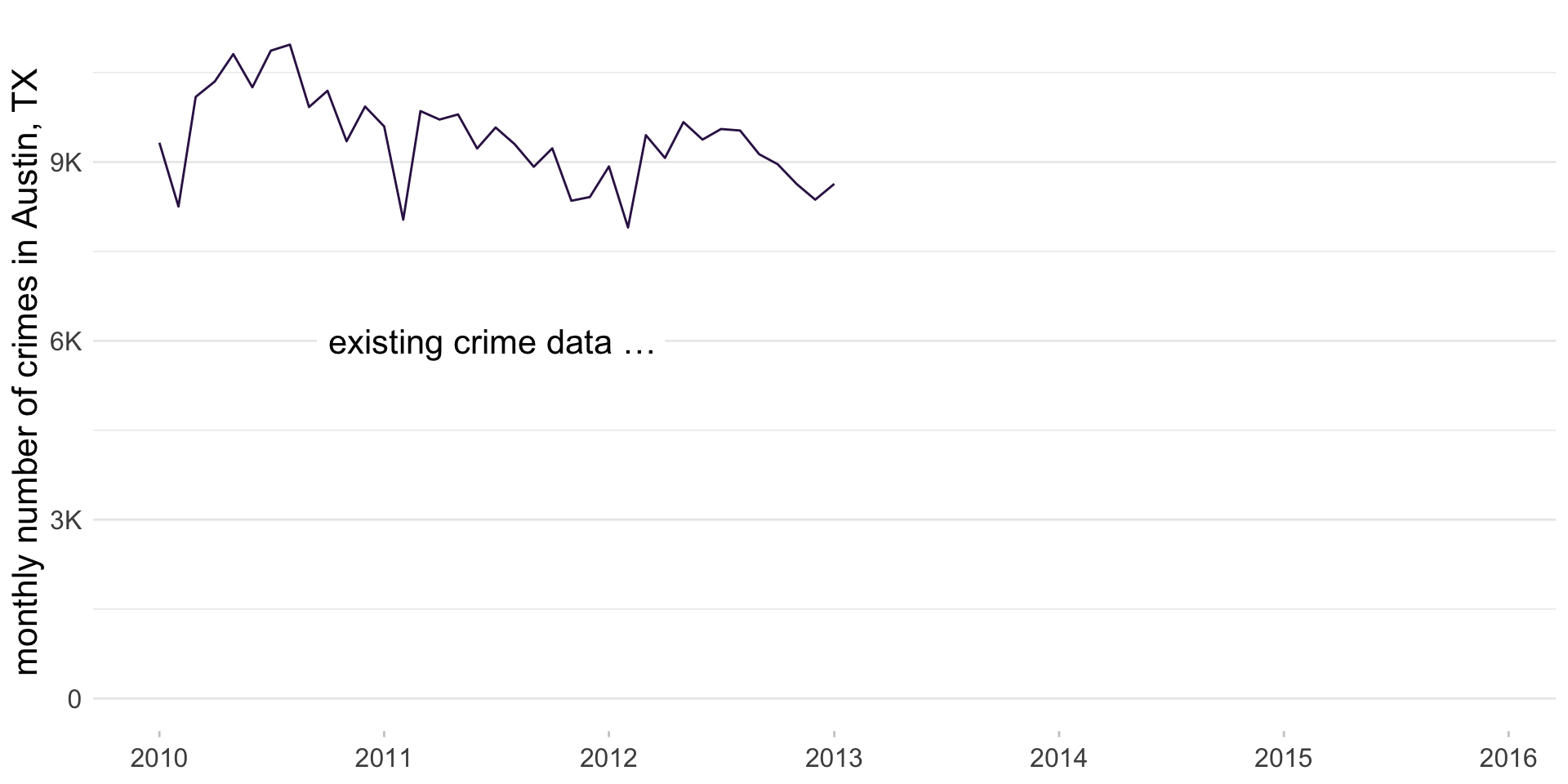
… to estimate how many will occur in the future
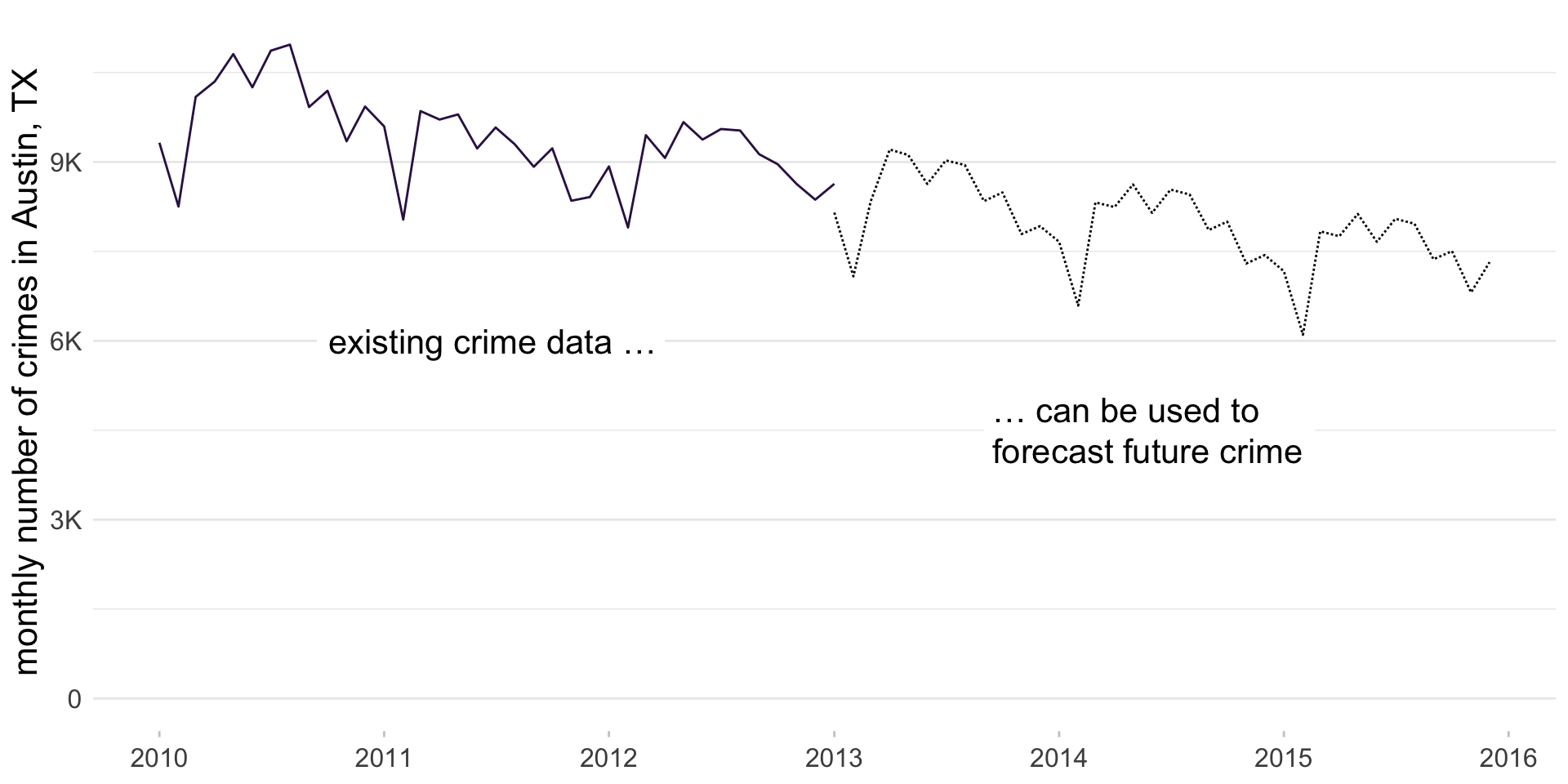
How forecasting could be useful to policing
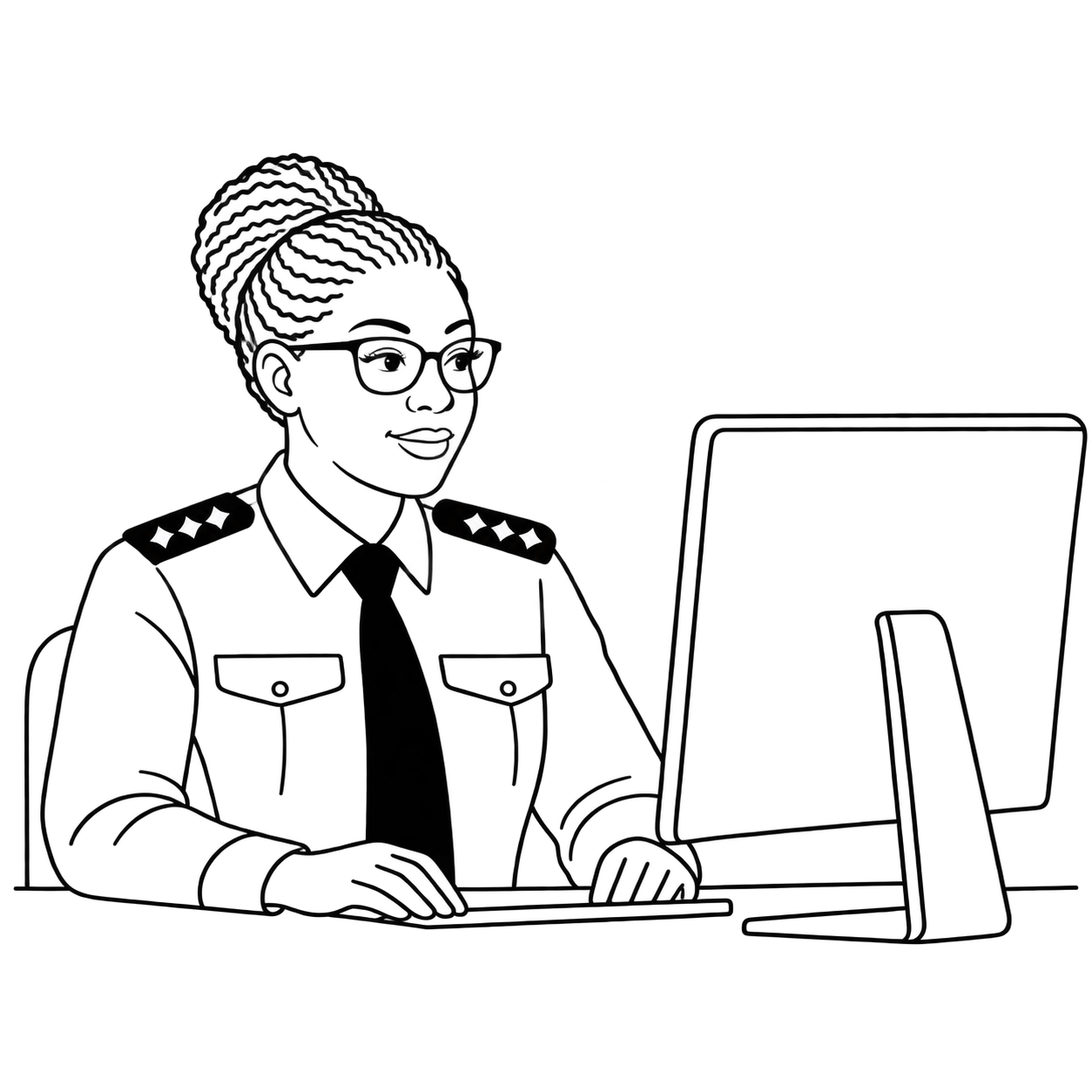
A commander wants to know how many crimes are likely to occur each month for the next three years
A rosters officer wants to know how many crimes are likely each day for the next three months.


A senior detective wants to know how many serious assaults are likely each month for the next year.
Forecasting breaks time series into components
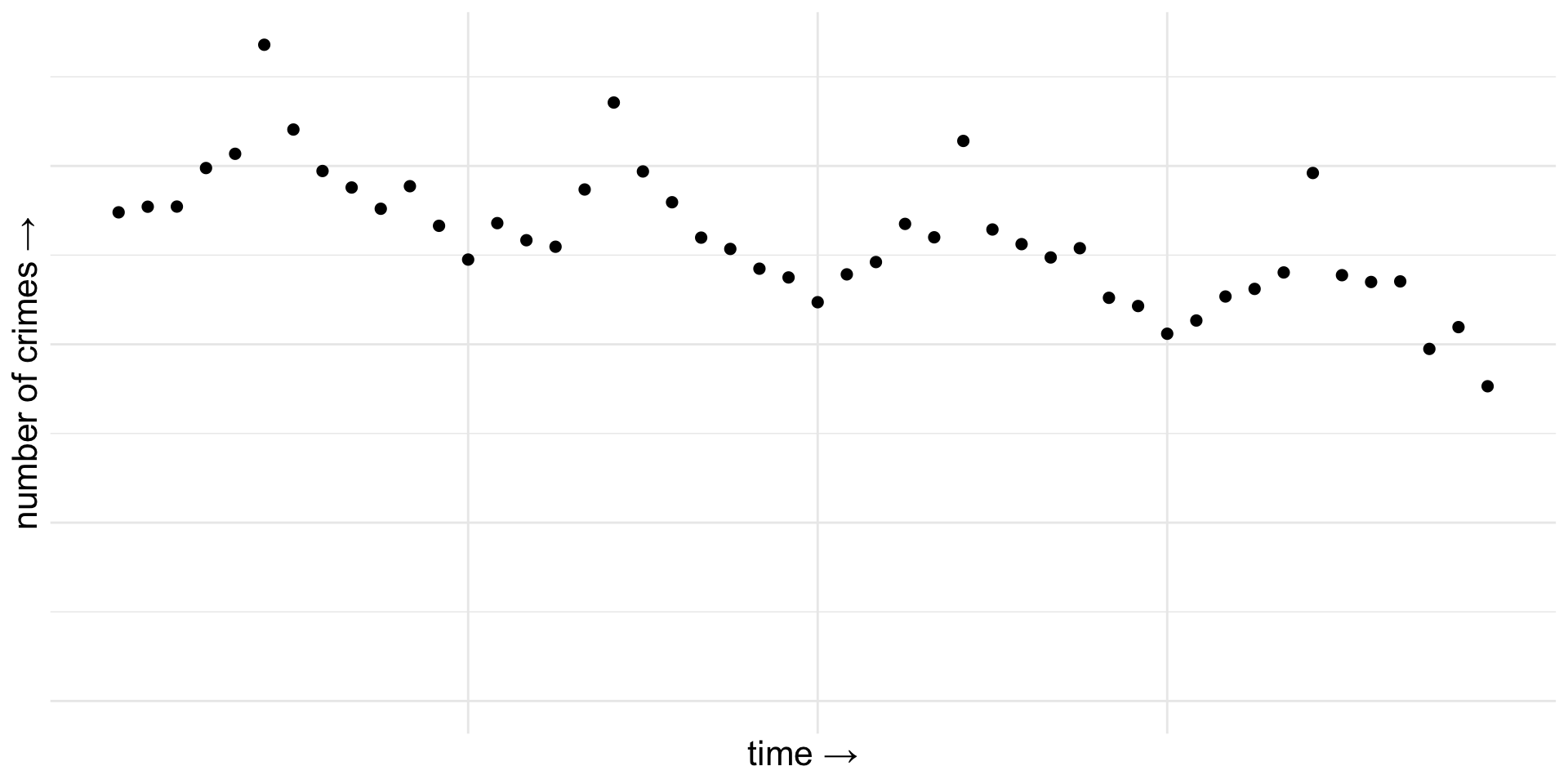
Time series = trend +
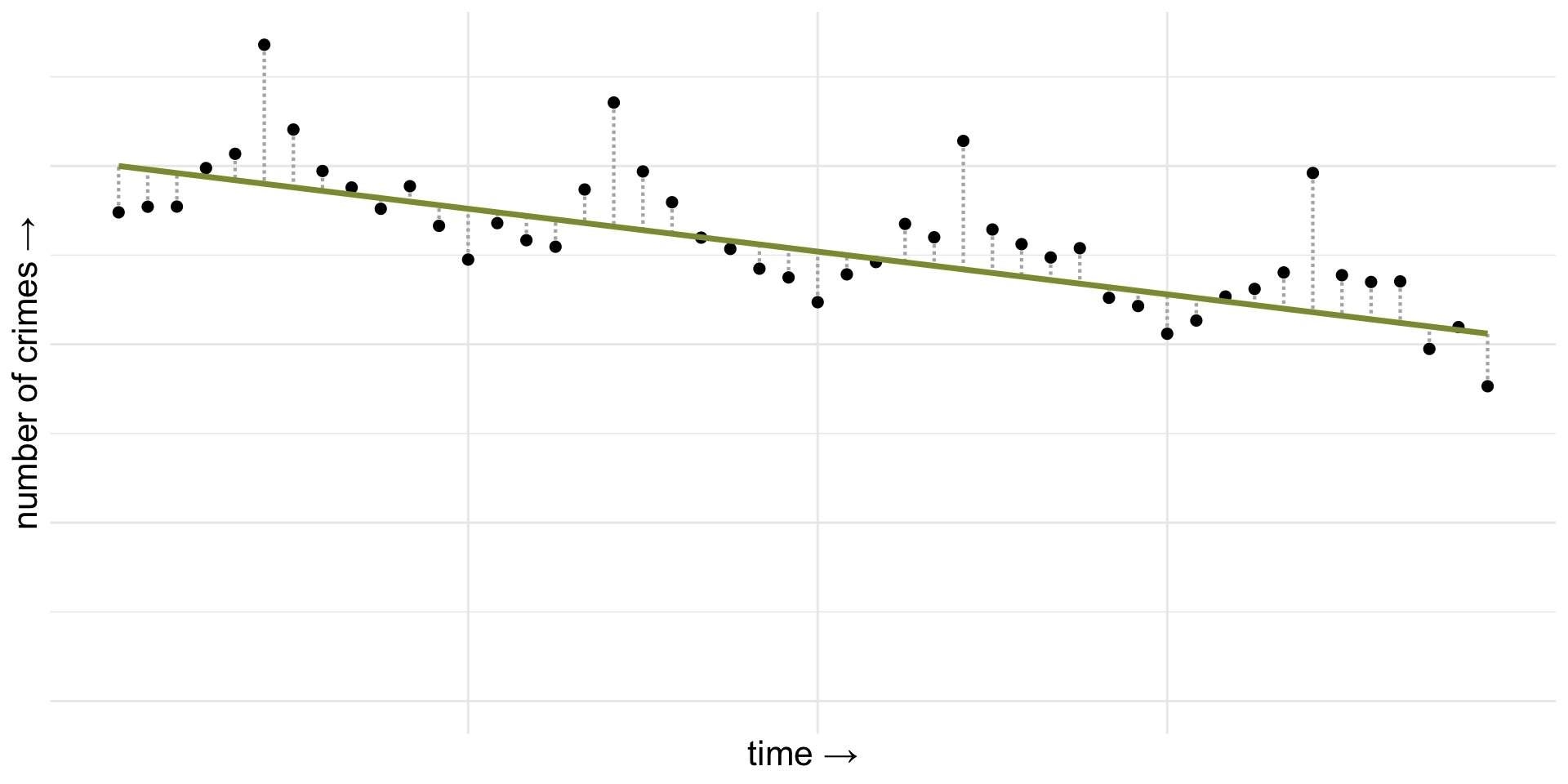
Time series = trend + season +
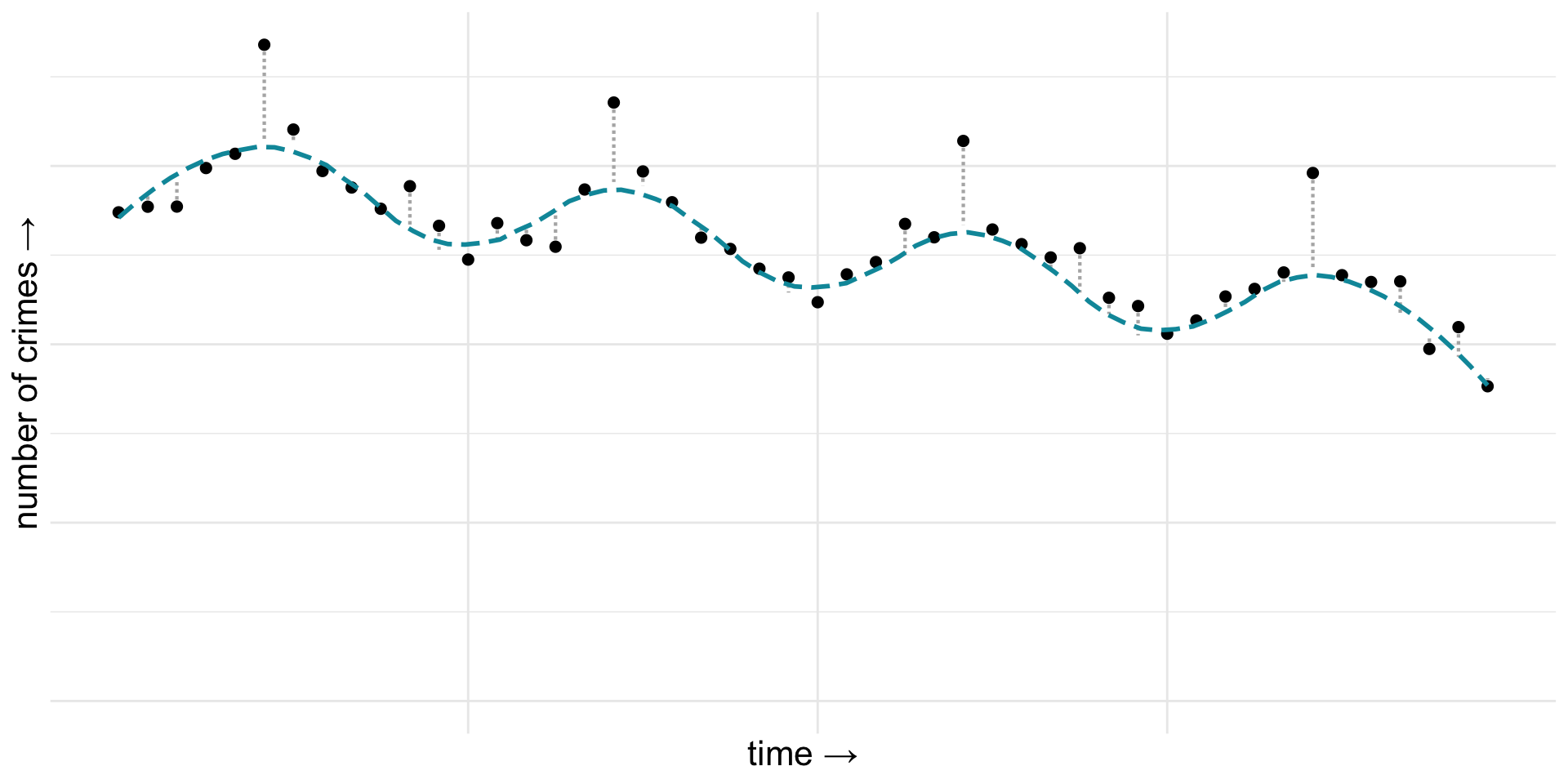
Time series = trend + season + other
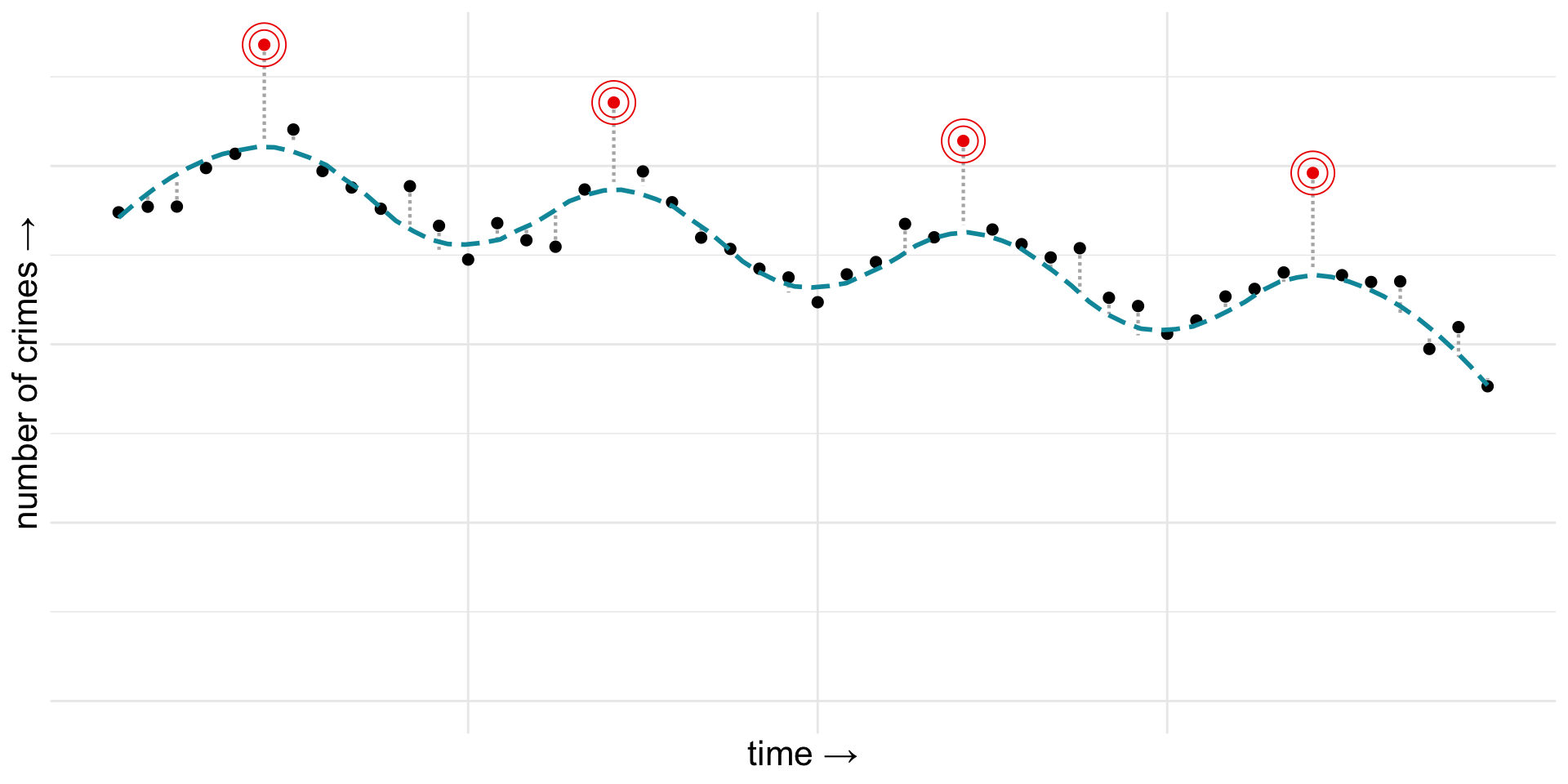
Many repeating and one-off events can influence time series
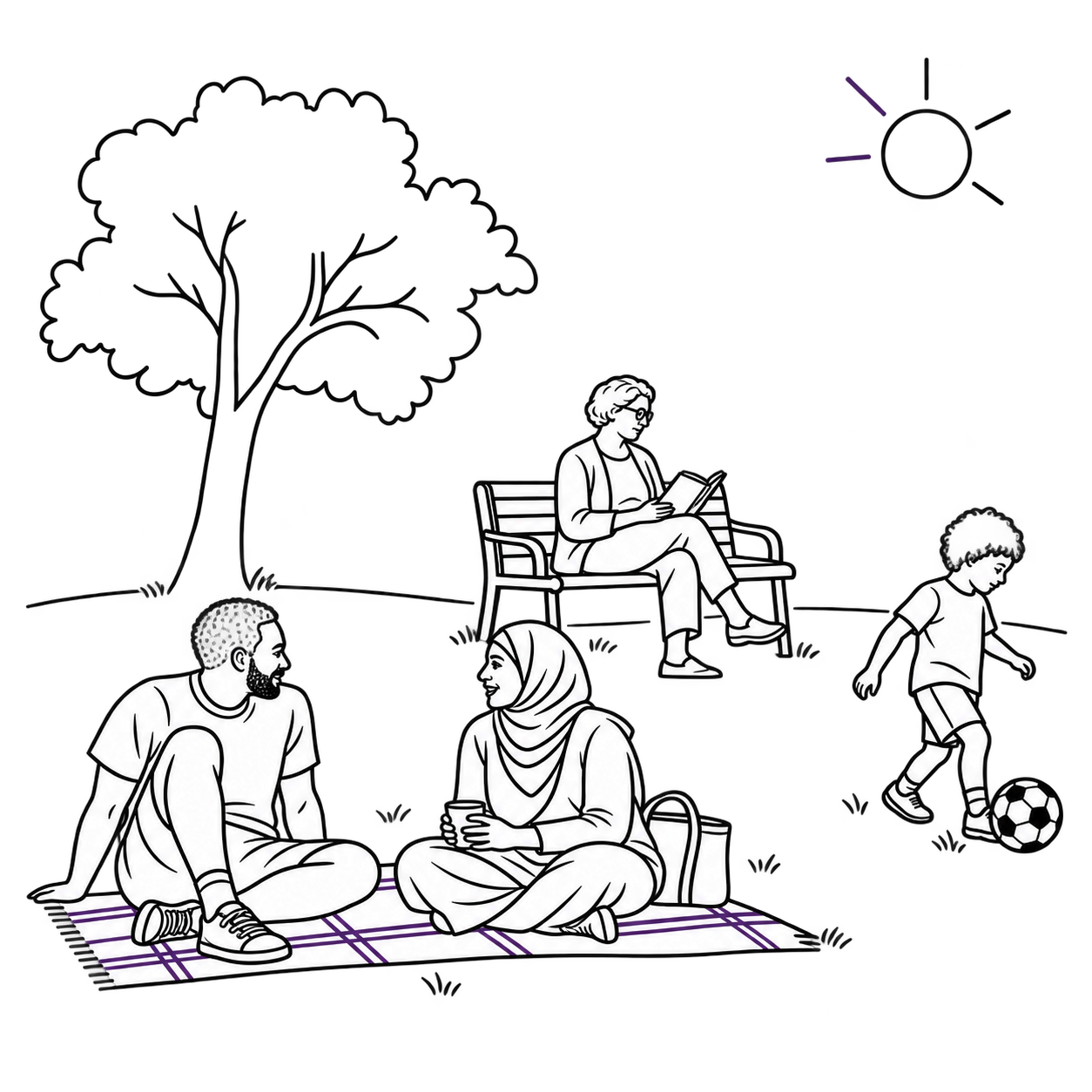
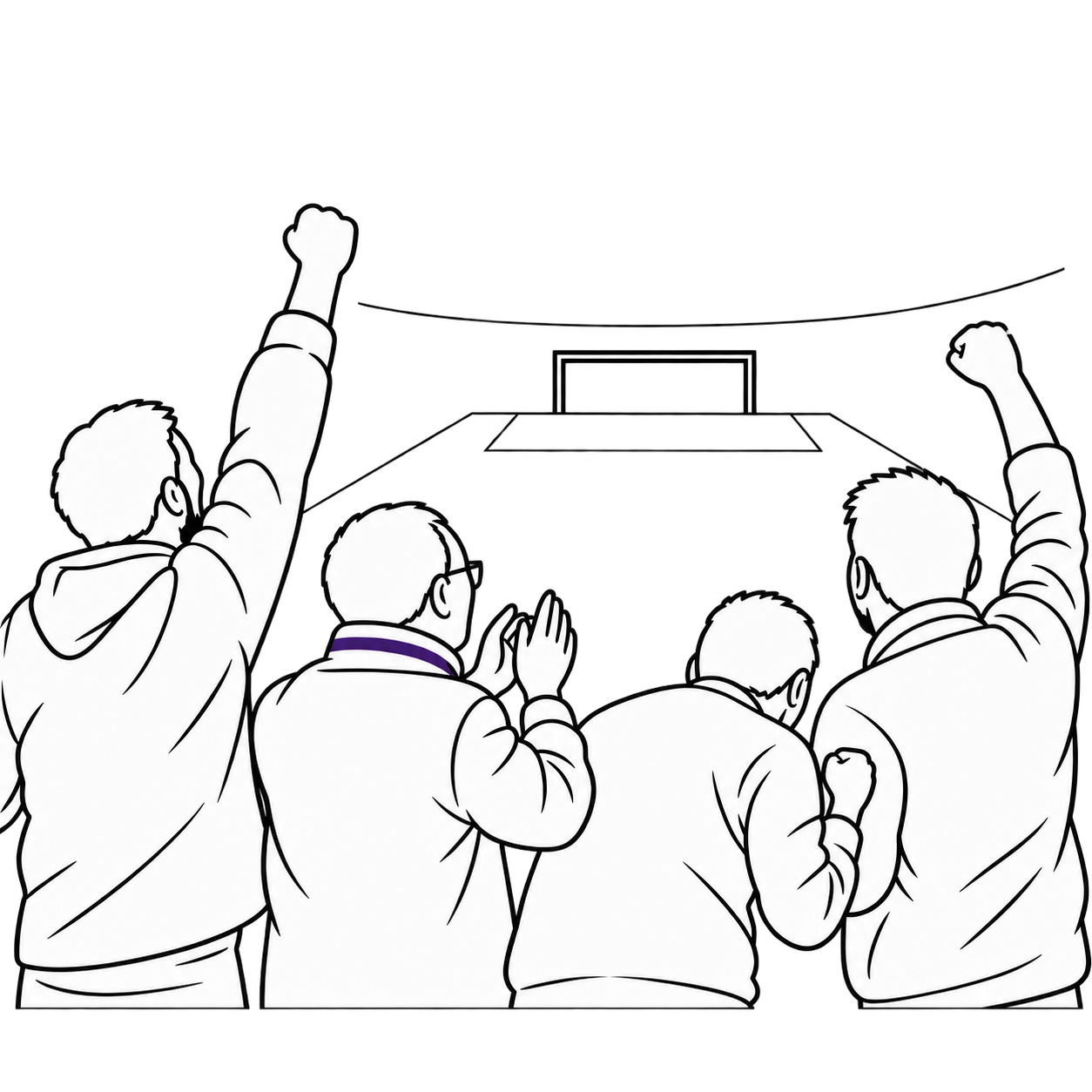
Forecasting relies on structural stability, but …


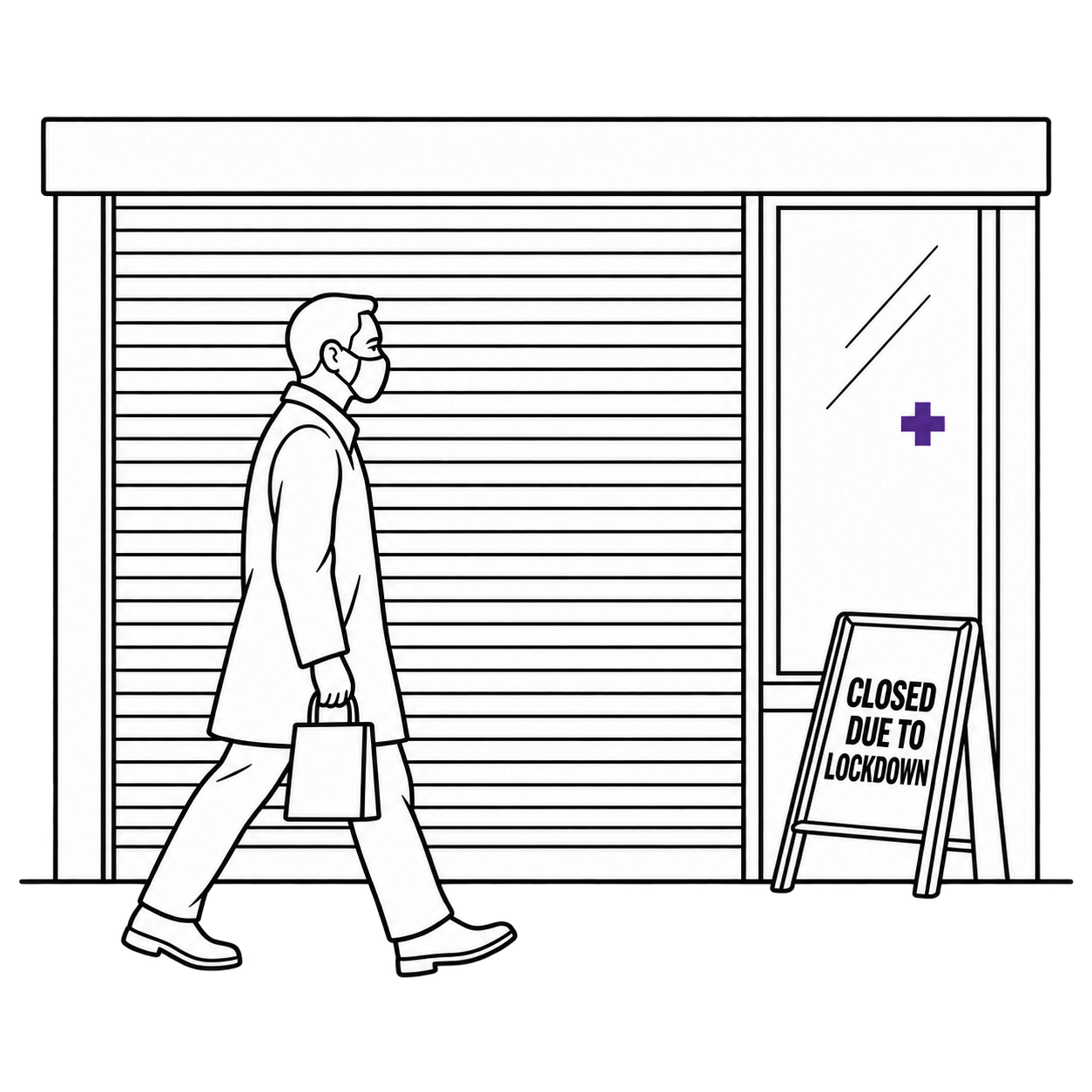
(we’ll come back to this)
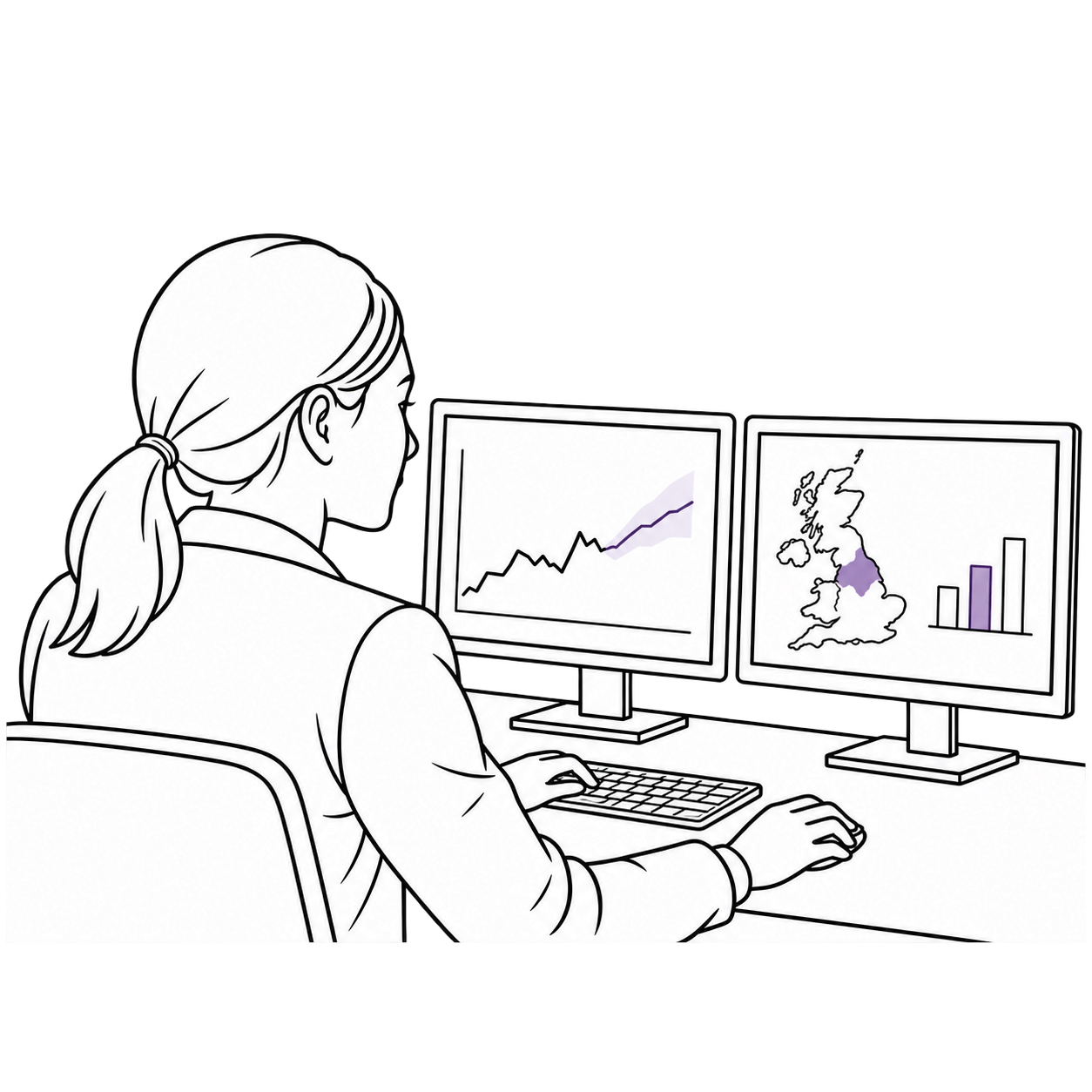
Intelligence/performance analysts …
- must master lots of skills
- usually have limited time
- sometimes have limited software access
⇒ need forecasting to be semi-automatic
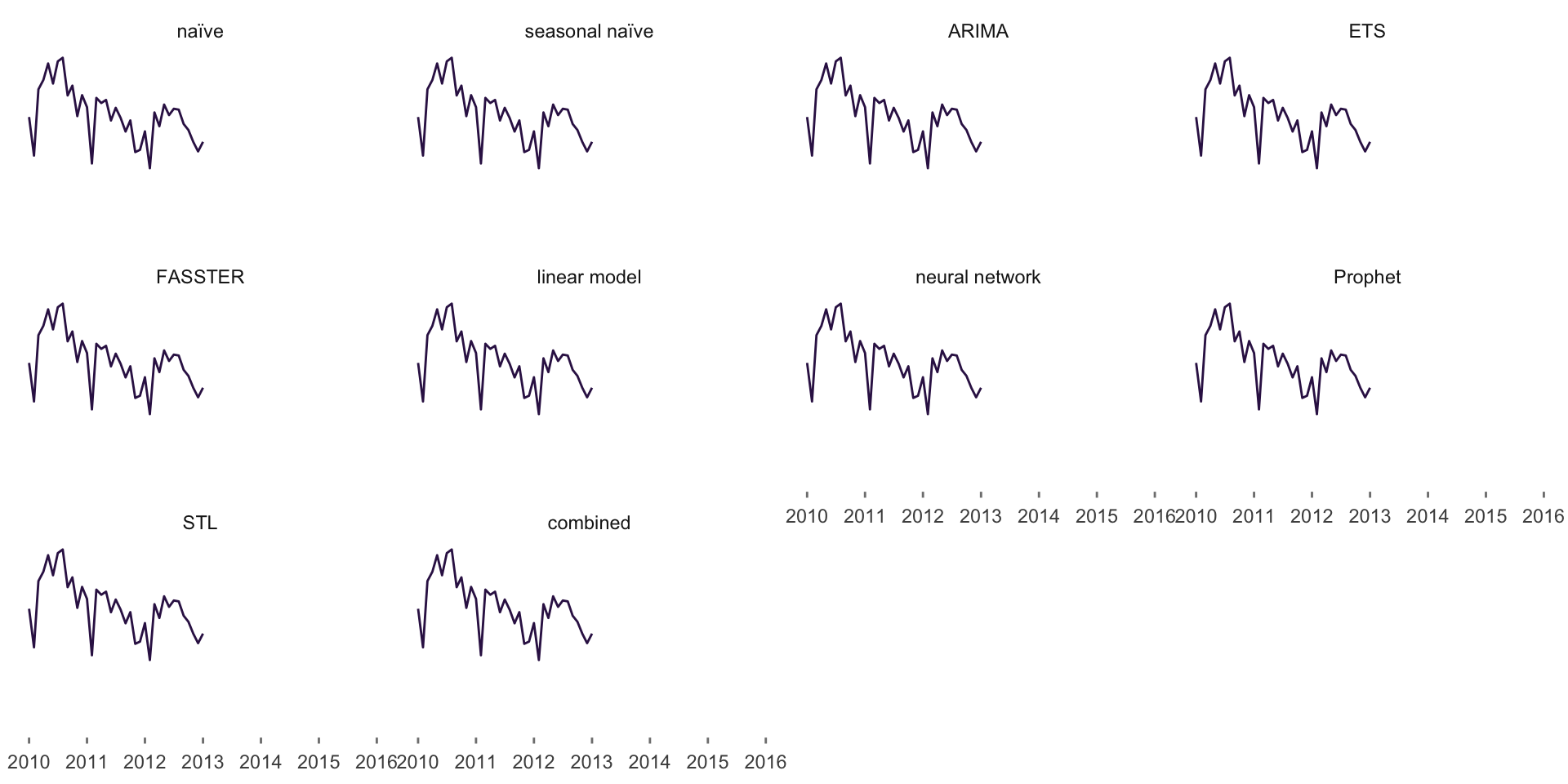
We tested 10 different forecasting methods
We tested 10 different forecasting methods
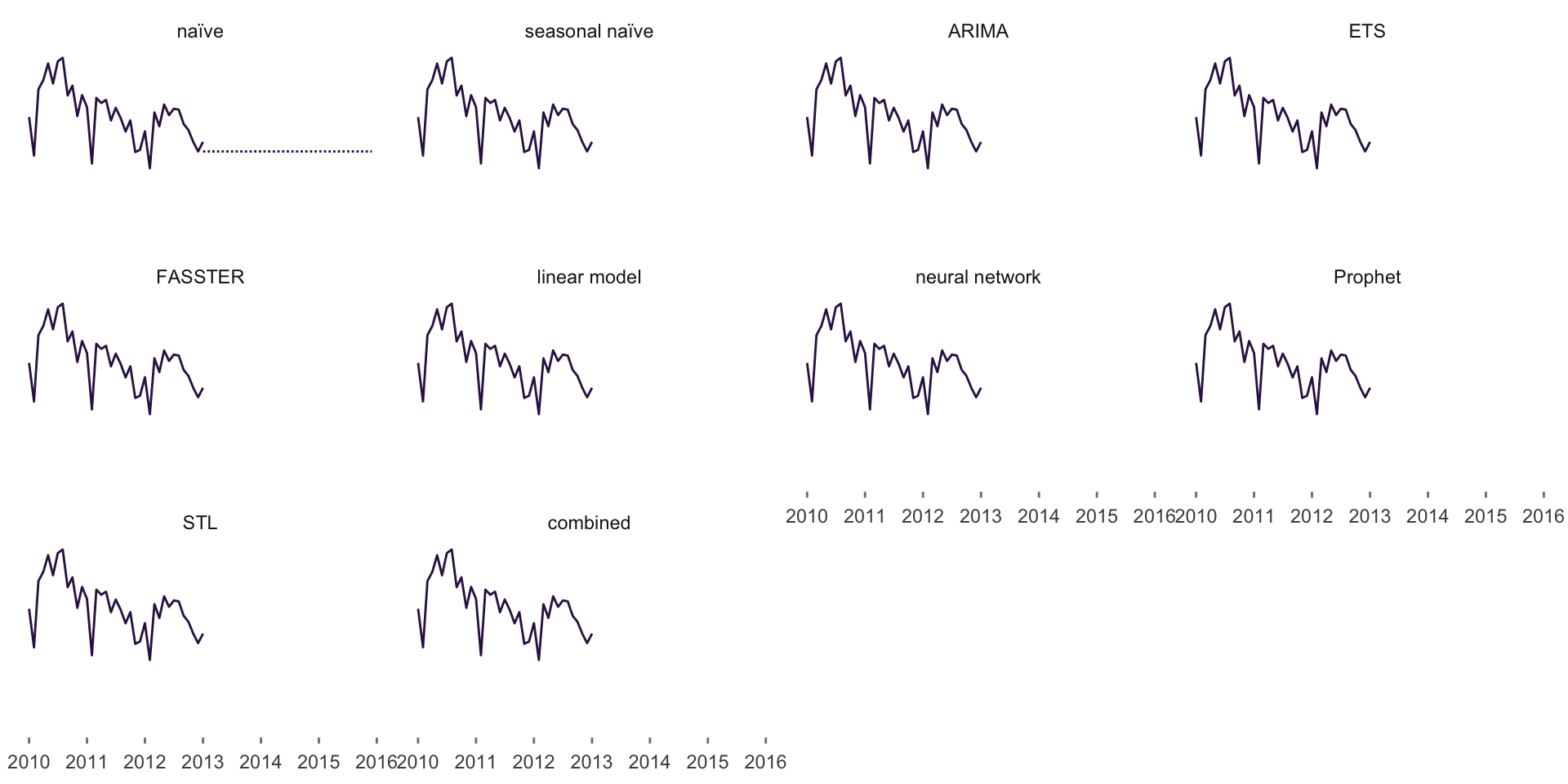
We tested 10 different forecasting methods
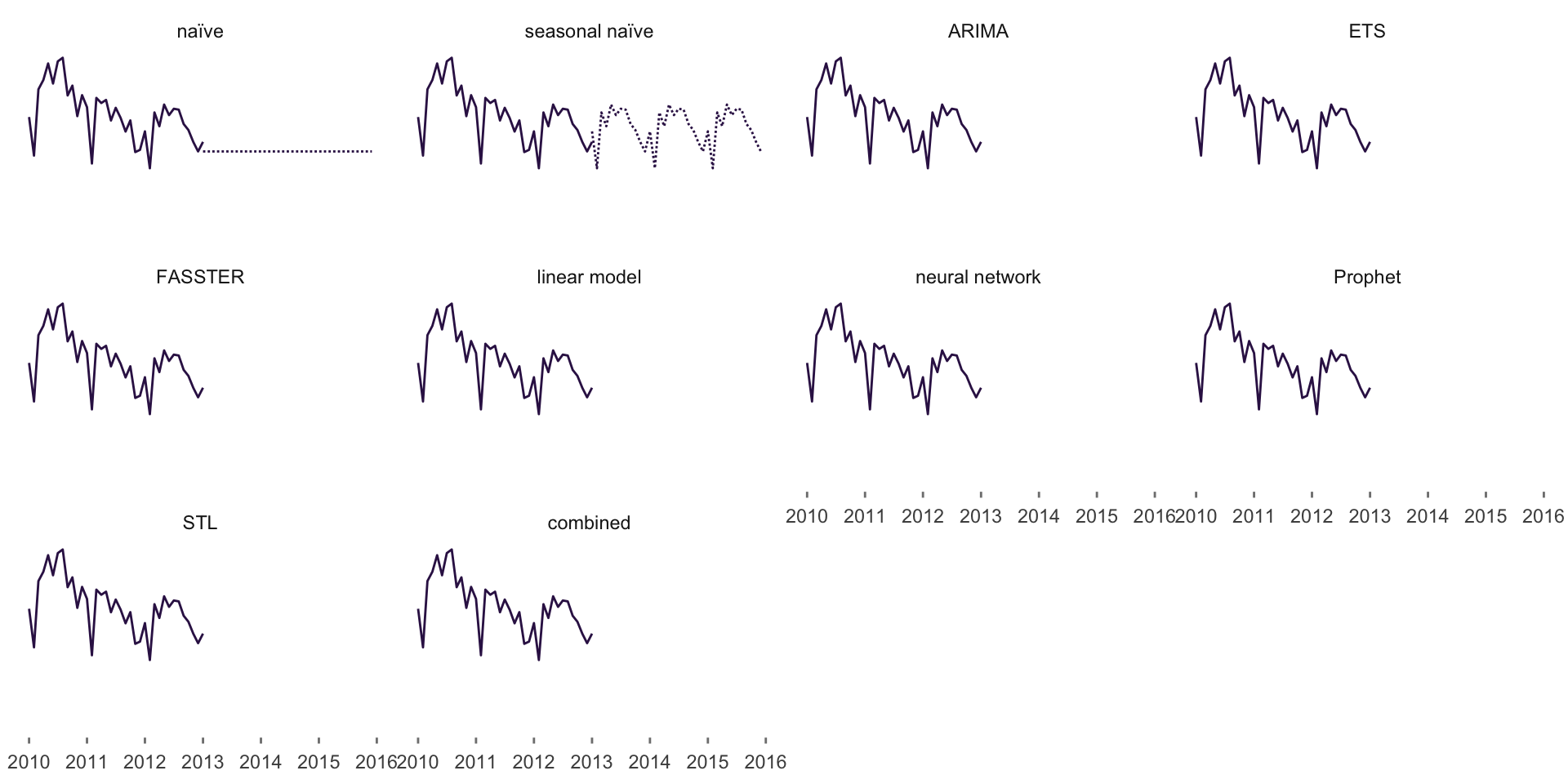
We tested 10 different forecasting methods
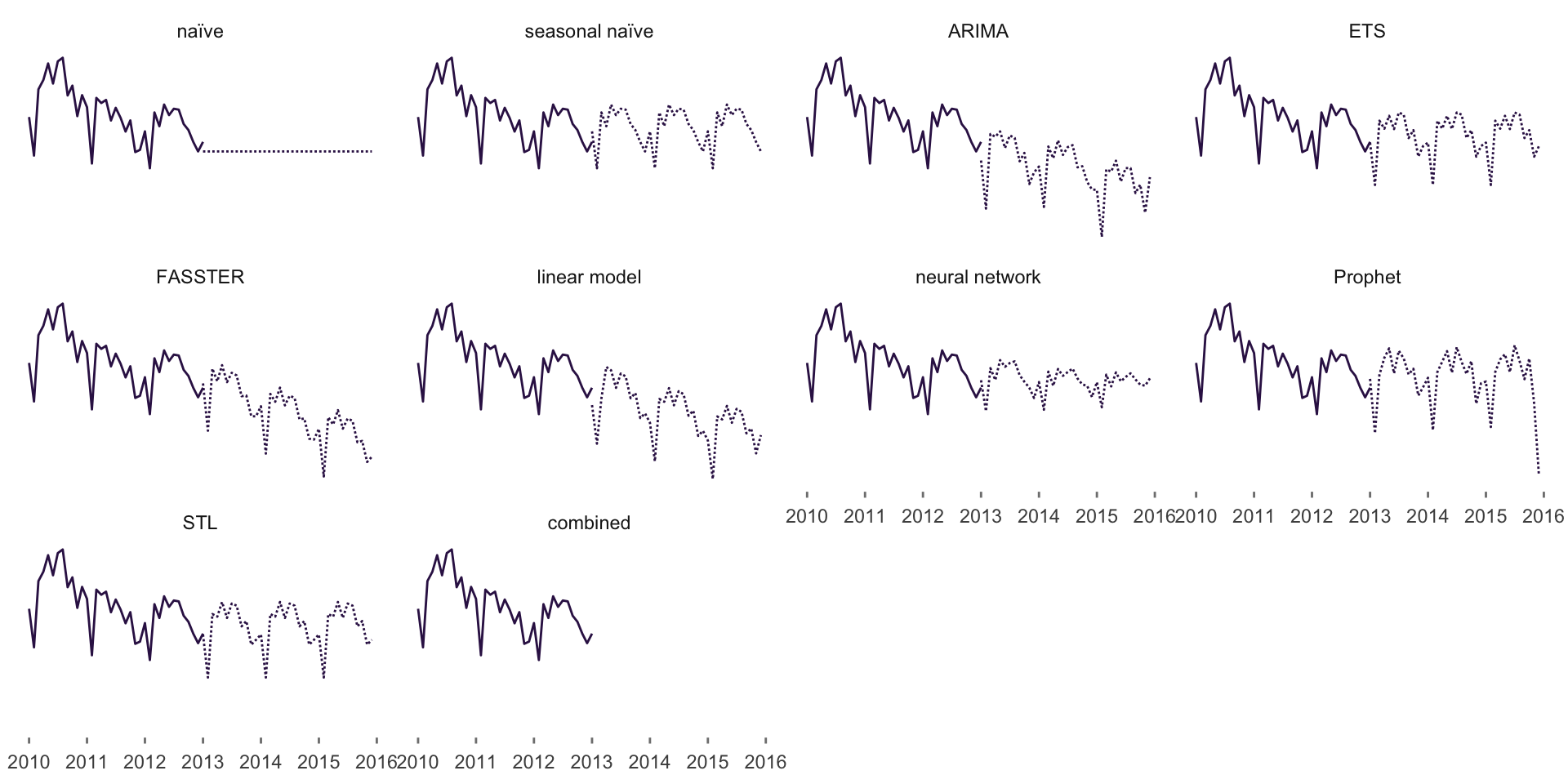
We tested 10 different forecasting methods
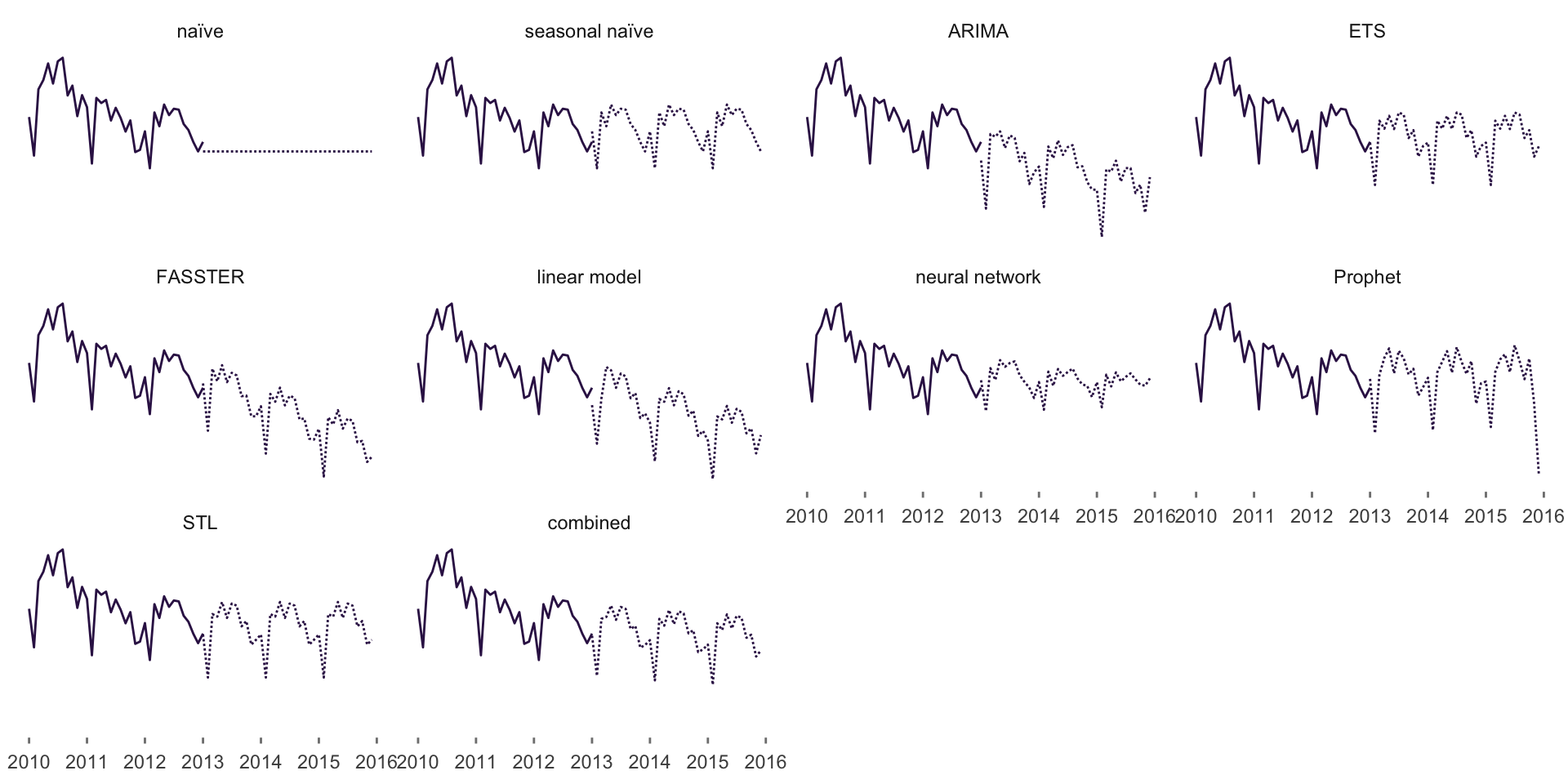
We test how good a forecast is by looking at the difference between the forecast and reality
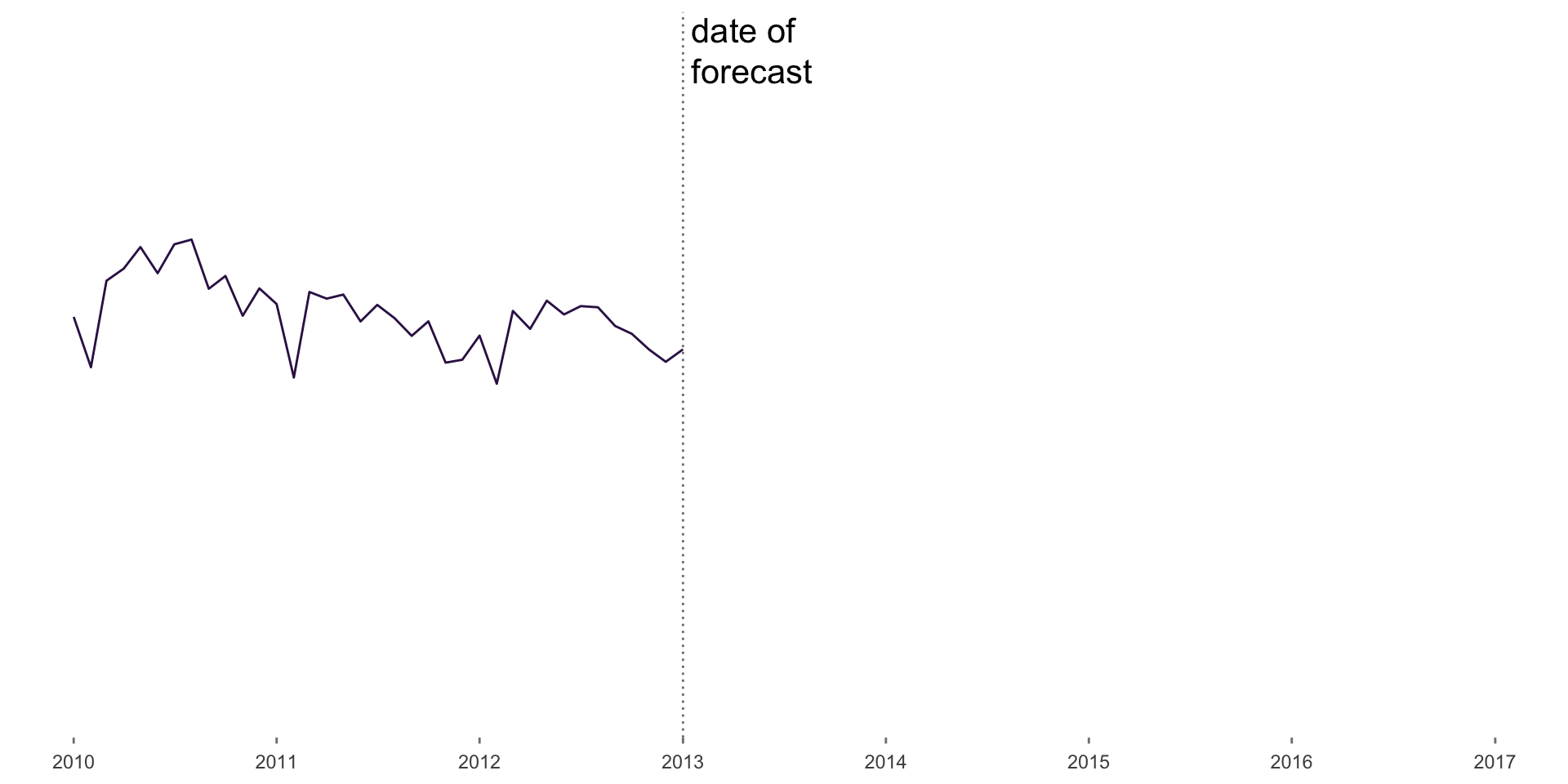
We test how good a forecast is by looking at the difference between the forecast and reality
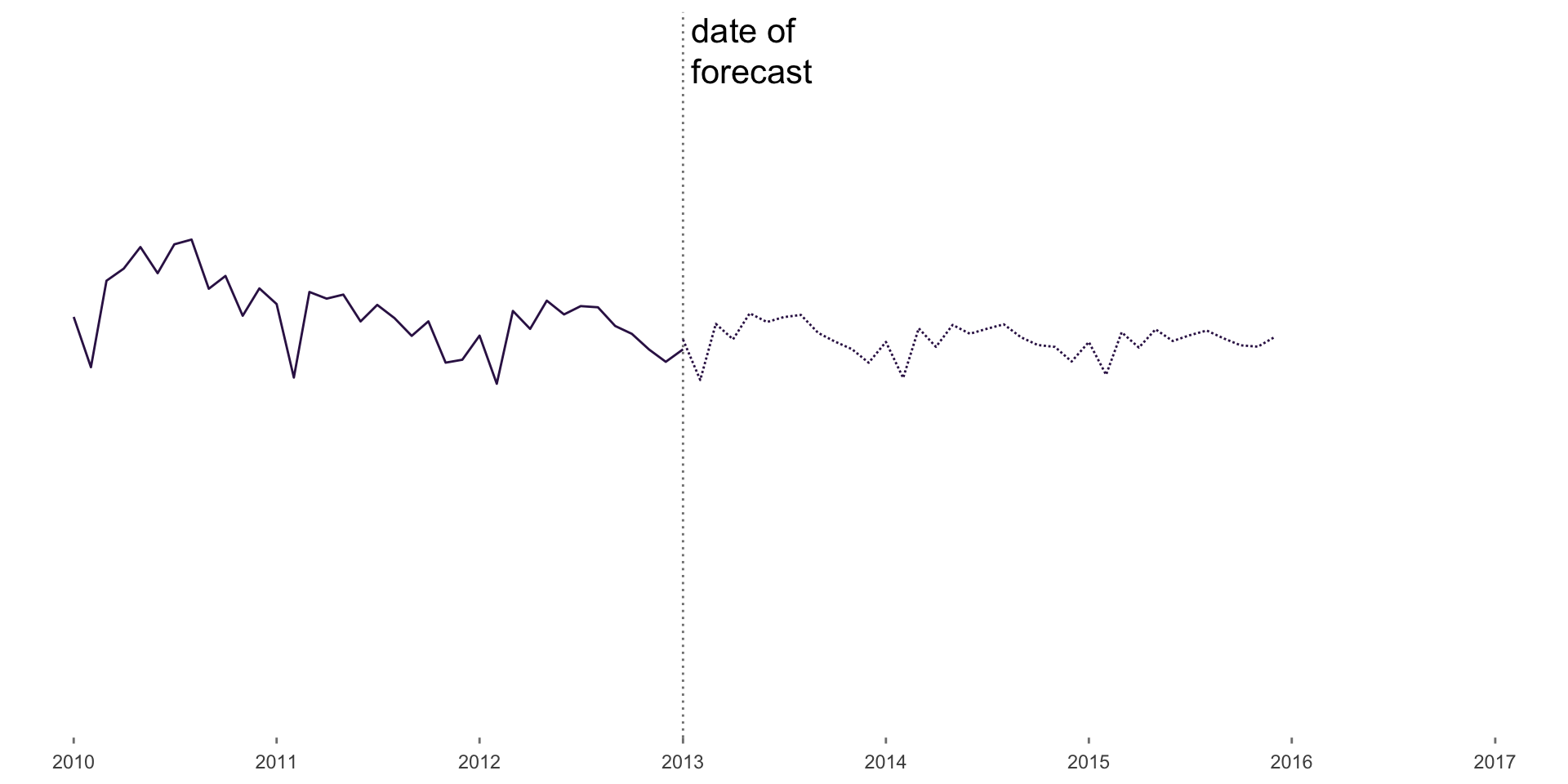
We test how good a forecast is by looking at the difference between the forecast and reality
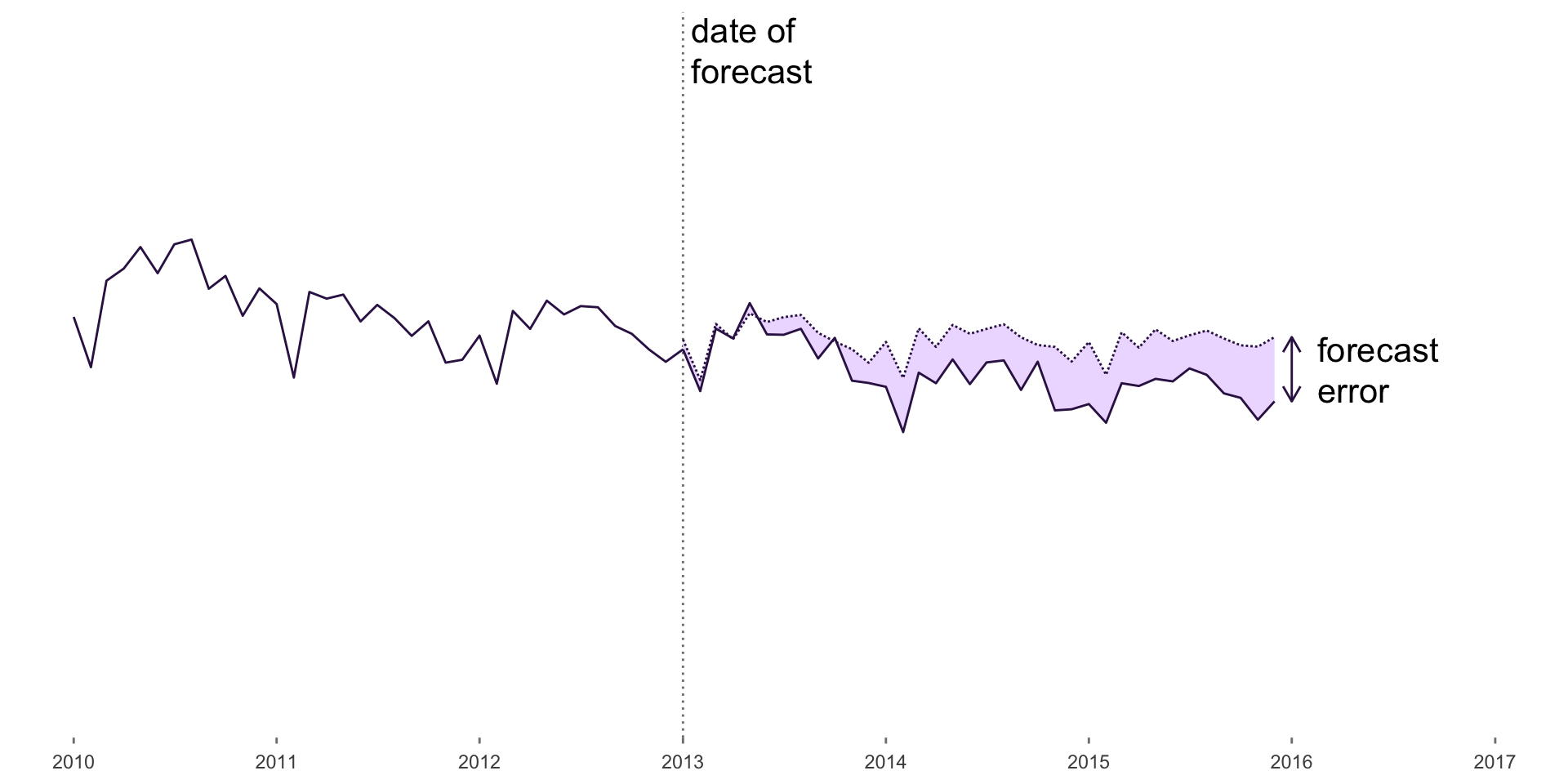
We can compare the accuracy of different types of forecast
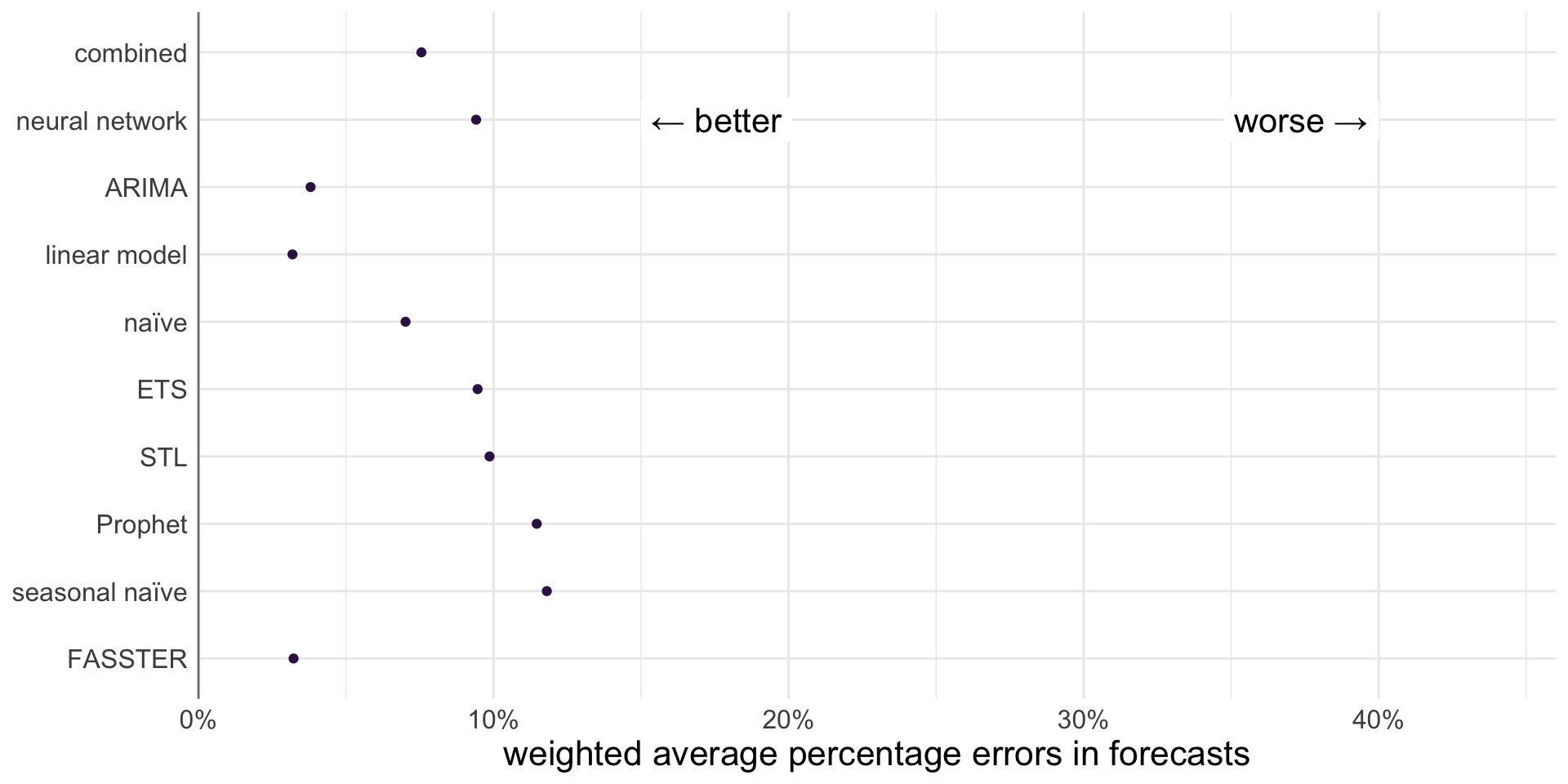
… but comparing forecasts repeatedly is better
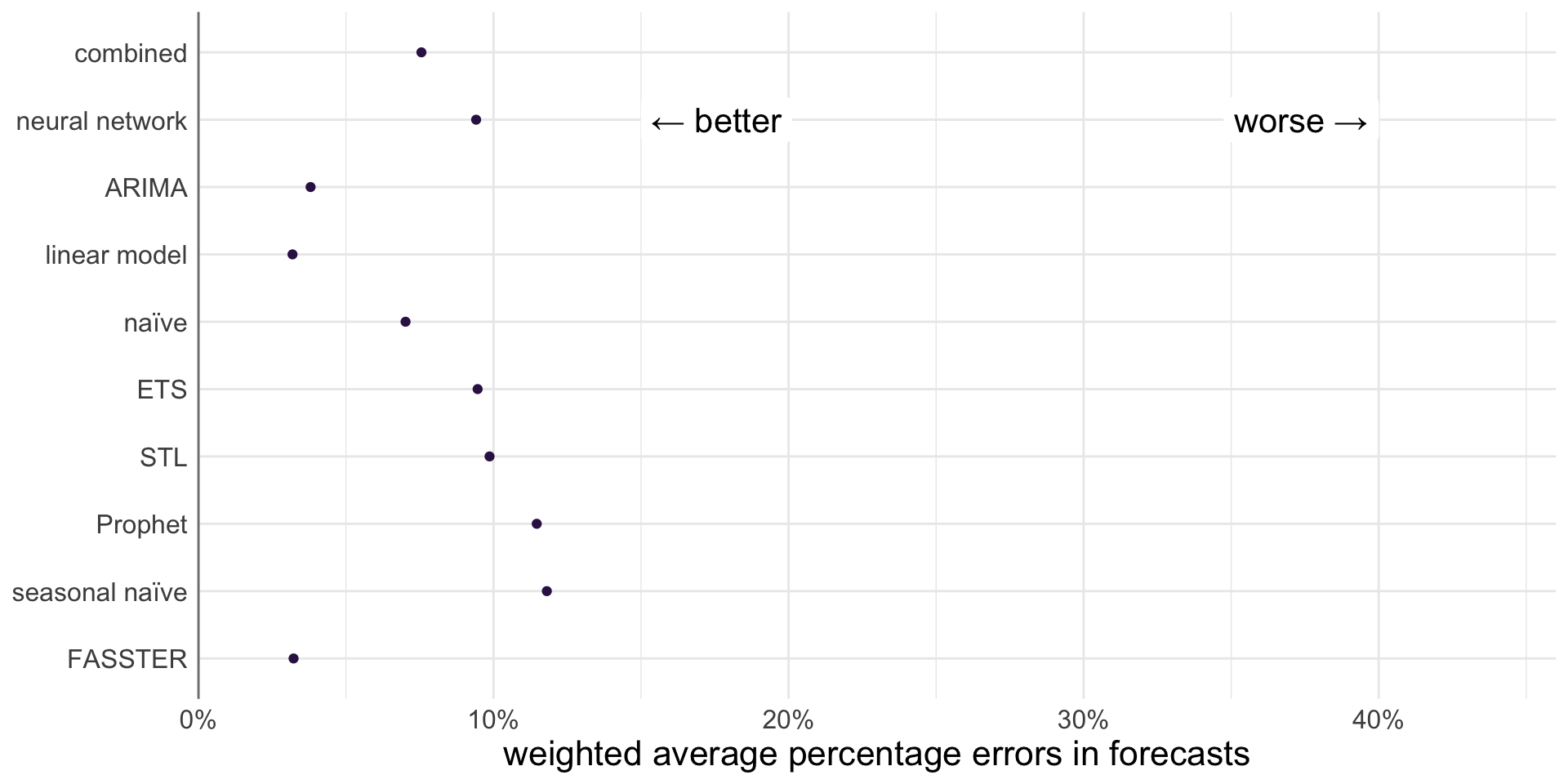
… but comparing forecasts repeatedly is better
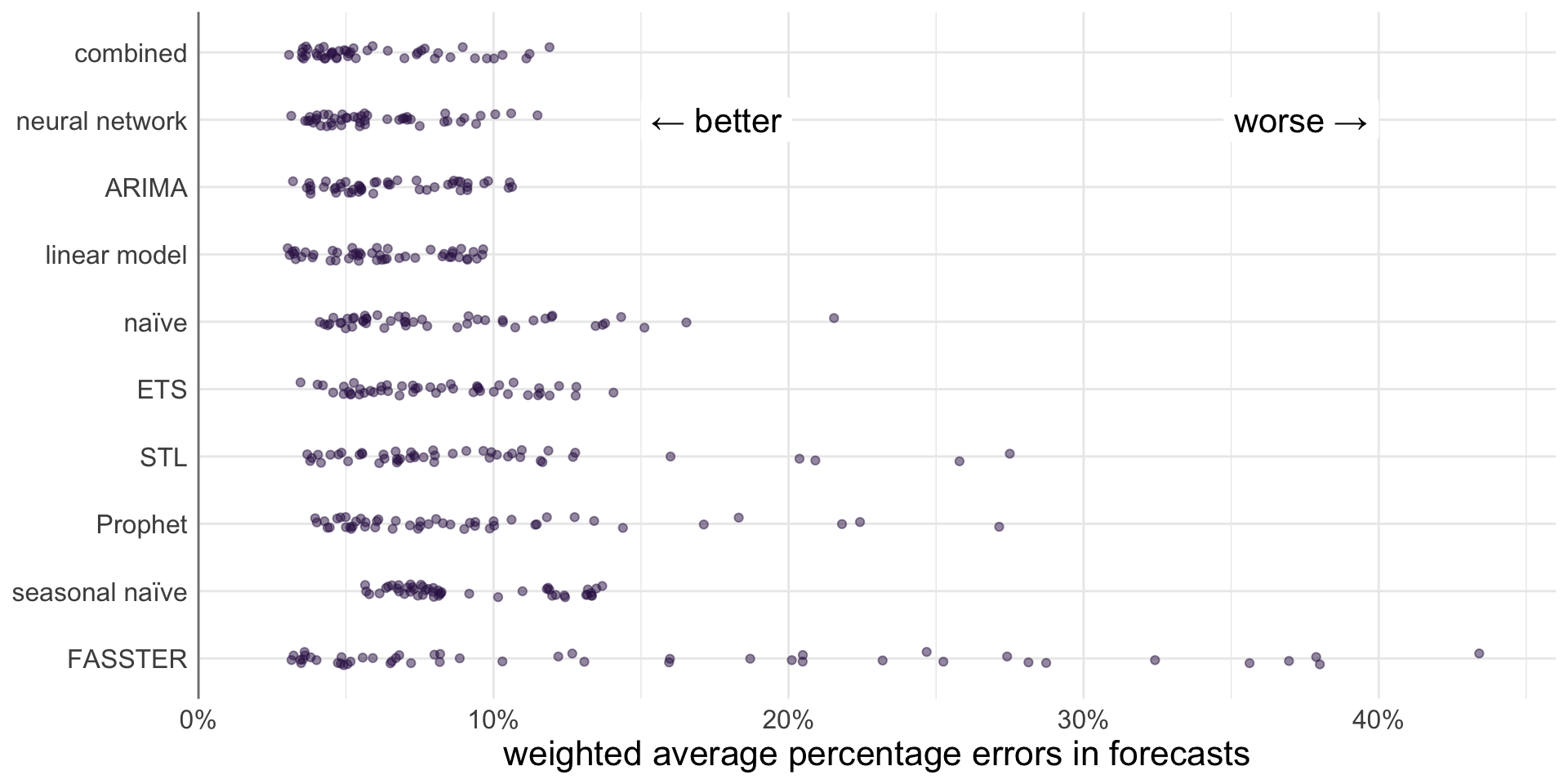
… but comparing forecasts repeatedly is better
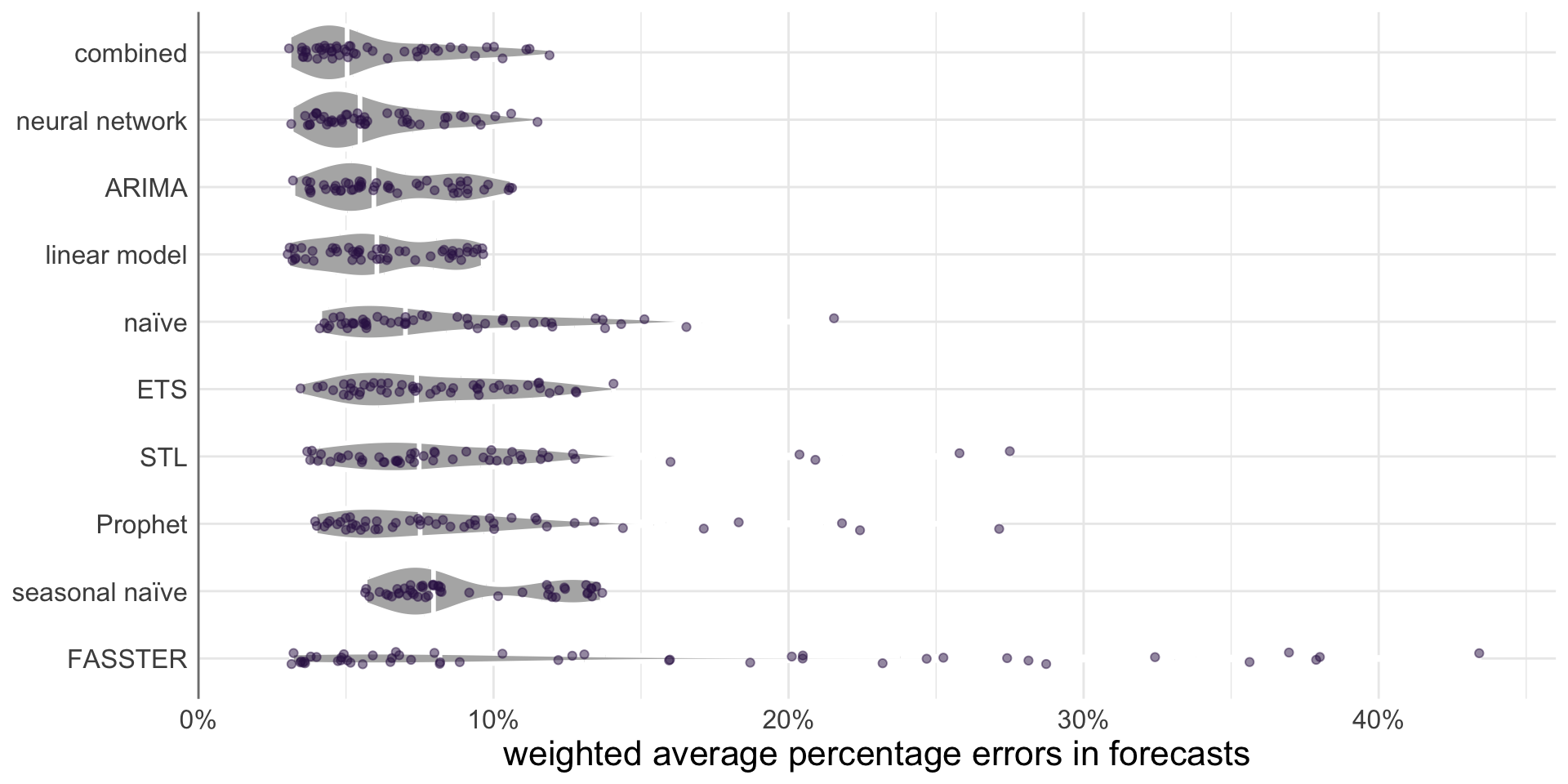
… but comparing forecasts repeatedly is better
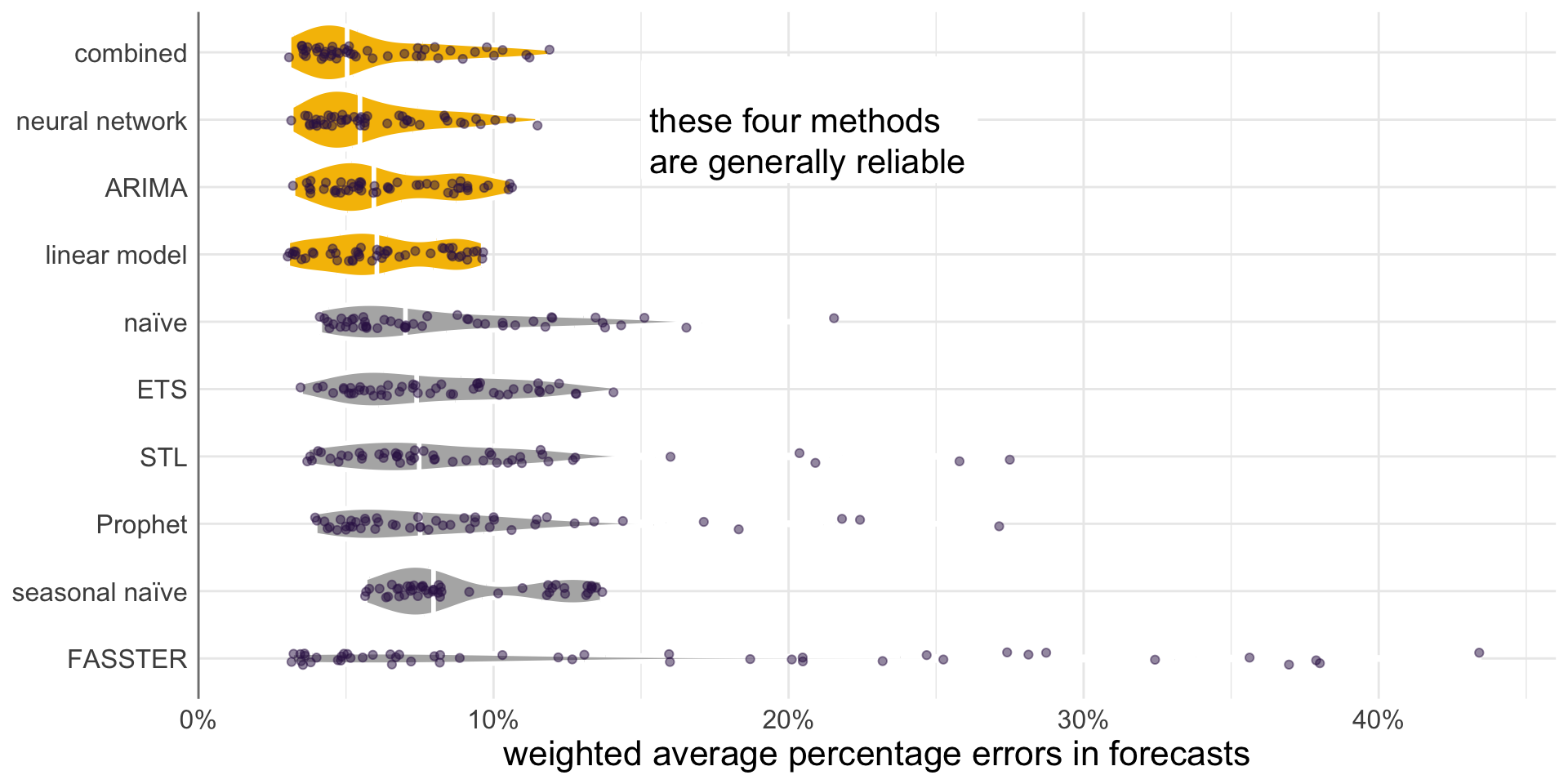
… but comparing forecasts repeatedly is better
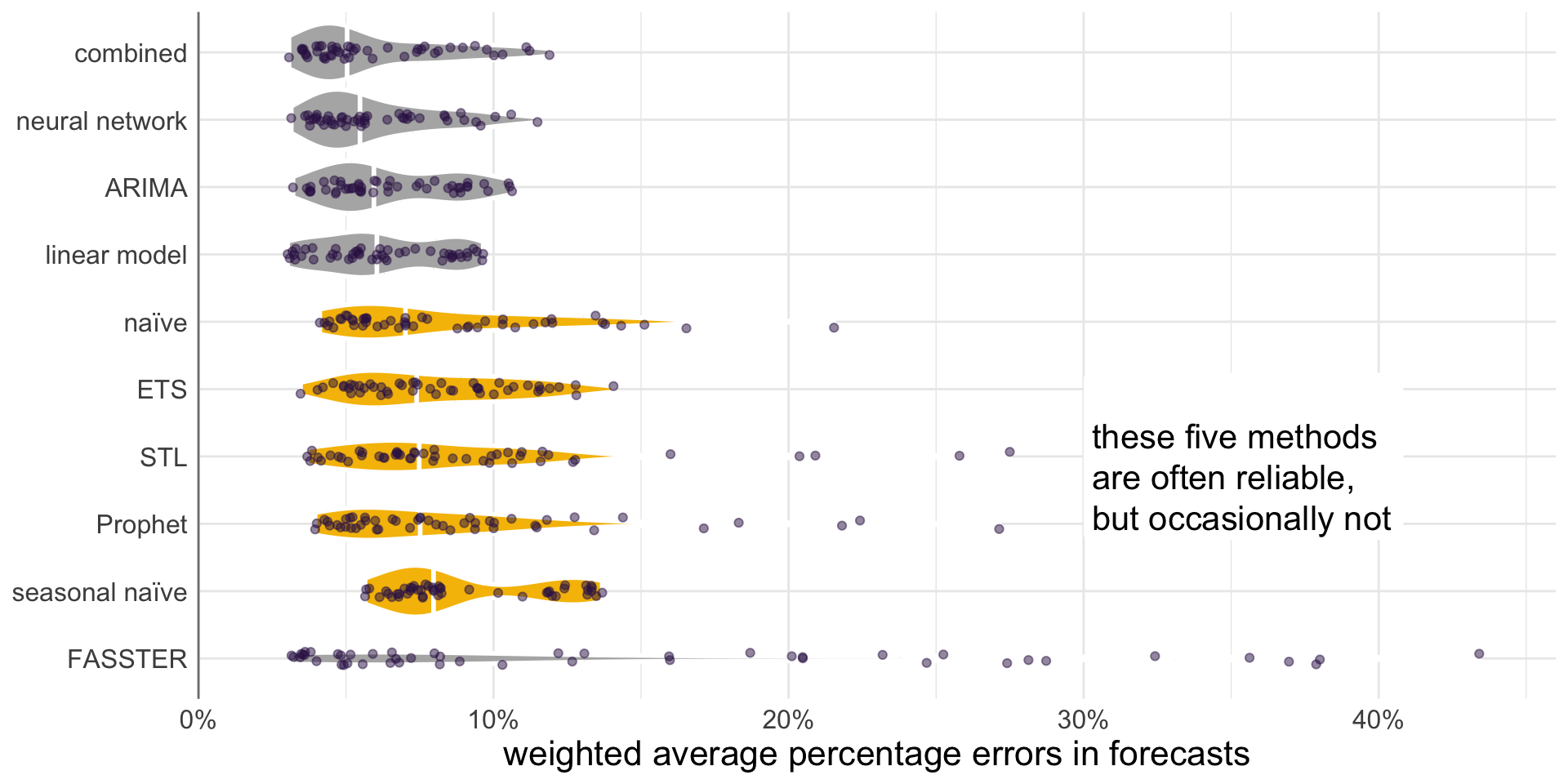
But what about structural stability?