Homicide in England and Wales, Part 4: Homicide methods

Author

Matt Ashby

Published

26 Jan 2026

This is the fourth in a series of blog posts summarising the nature of homicide in England and Wales. Each post covers a different aspect of homicide, based on data from the Home Office Homicide Index. This post looks at different homicide methods. This post is a summary of part of a longer national problem profile of homicide in England and Wales written by me and Prof Iain Brennan.

Stabbing is the most common homicide method

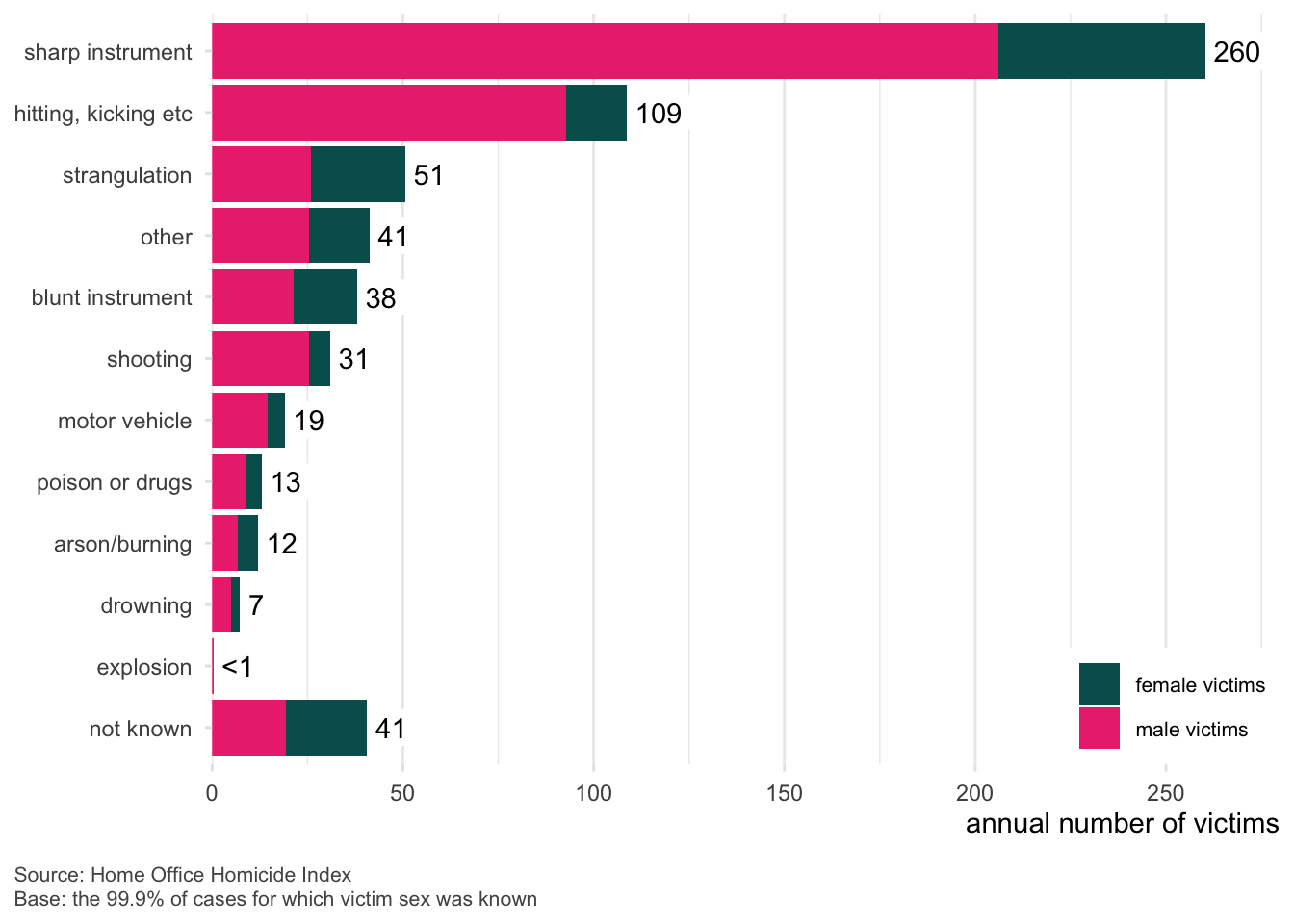
The most common homicide methods in England and Wales were killing using a sharp instrument (42% of all homicides), killing by hitting, kicking etc (17%) and strangulation (8%) (Figure 1). The category of killing with a ‘sharp instrument’ includes homicides committed with any type of knife, but also offenders stabbing victims with a screwdriver or any other sharp or pointed object.

Figure 1: Homicide methods by victim sex
Bar chart showing average annual number of homicide victims in England and Wales by method and gender, based on Home Office Homicide Index data. The most common method is sharp instruments, with around 260 victims, predominantly male. Next is hitting, kicking, etc., with around 109 victims. Strangulation, blunt instruments, and other methods follow with 30–50 victims each. Shooting, use of vehicles, poison, and burning have fewer victims. Drowning and explosions are least common. Gender is color-coded: pink for male and dark teal for female victims. A category labeled “not known” includes 41 victims where the method was unclear.

Fatal shootings are rare in England and Wales, with 31 people murdered with a firearm each year. The firearms homicide rate in England and Wales is also very low by international standards (Figure 2). In the United States the firearms homicide rate is 86 times higher than in England and Wales, although the rarity of firearms homicides in England and Wales means this ratio fluctuates from year to year. But even comparing England and Wales to other countries in Europe, the firearms homicide rate in 3 times higher in the Netherlands and 10 times higher in Sweden.
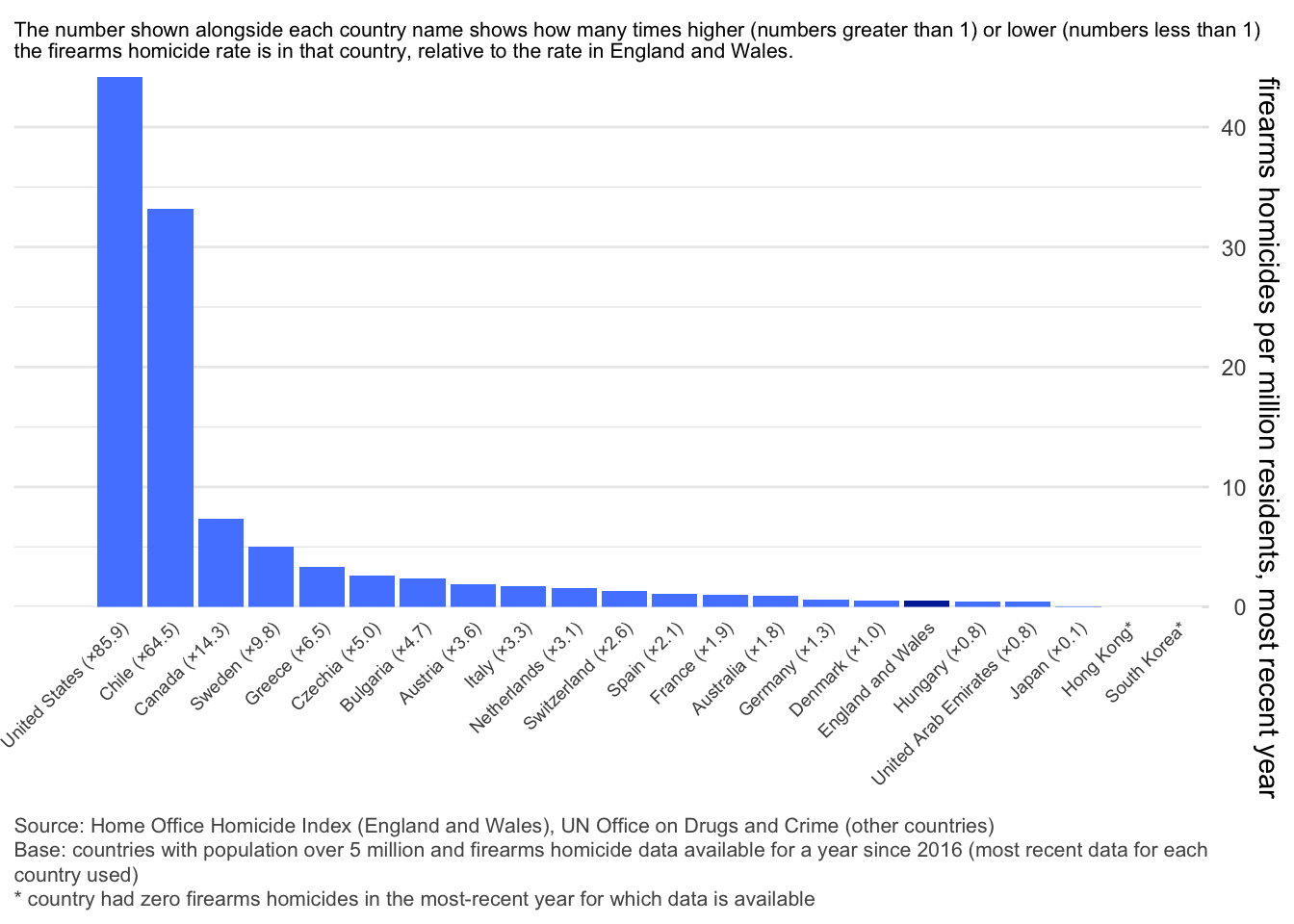
Figure 2: Firearms homicide rates in large developed countries
Bar chart comparing firearms homicide rates in various countries to England and Wales, where the rate is set as the baseline (1.0). The United States has the highest rate, at 85.9 times higher. Chile (64.5 times), Canada (14.3 times), and Sweden (9.8 times) follow. Most other countries, including Germany, Denmark, and Australia, range from 1.9 to 0.8. Japan, Hong Kong, and South Korea had zero or near-zero rates. Data includes countries with over 5 million population and available firearms homicide statistics since 2016. Bars are shaded blue and listed left to right in decreasing order of homicide rate per million residents.

It’s sometimes suggested that although England and Wales has a very-low rate of firearms homicides, this is somehow ‘compensated for’ by a higher rate of knife homicides. But the data is clear: this isn’t true.

As shown in the first post in this series, the overall rate of homicide in England and Wales is lower than in many other countries, including other high-income countries.

Comparing knife and firearms homicides specifically is difficult because many countries don’t publish homicide statistics broken down by the type of weapon used. Table 1 shows homicide rates for firearms and knife homicides for highly developed English-speaking countries that do publish this data. This shows that the rate of knife homicides in England and Wales is broadly comparable to that in Australia, Canada and the United States, but that the firearms homicide rate in those countries is higher.

Table 1: Rate of firearms and knife homicides in developed, English-speaking countries
country year
homicides per million people
using firearms using knives
England and Wales 2022-23 0.5 4.1
Australia 2022–23 1.5 3.6
Canada 2023 9.9 8.0
United States 2023 59.1 6.6
Source: Office for National Statistics (UK), Australian Institute for Health and Welfare, Statistics Canada, Bureau of Justice Statistics (US)

Homicide methods vary for different types of victim

The most-common homicide methods were different for male and victims: male victims were disproportionately likely to be killed by hitting, kicking etc (85% of victims were male), shooting (82%), and sharp instrument (79%), while female victims were disproportionately likely to be killed by strangulation (49% of victims were female), arson/burning (44%), and blunt instrument (44%).

Homicide methods also varied depending on the age of the victim (Figure 3). For male victims, the proportion of homicides committed with a sharp instrument peaks for teenage victims and then decreases with age, while older men were more likely to be killed by hitting or kicking. For female victims, the proportion of homicides committed with a blunt instrument rose with victim age. Homicides of very young and very old victims are more likely to be committed using other methods (although the Homicide Index does not contain any more detail on what those methods are).
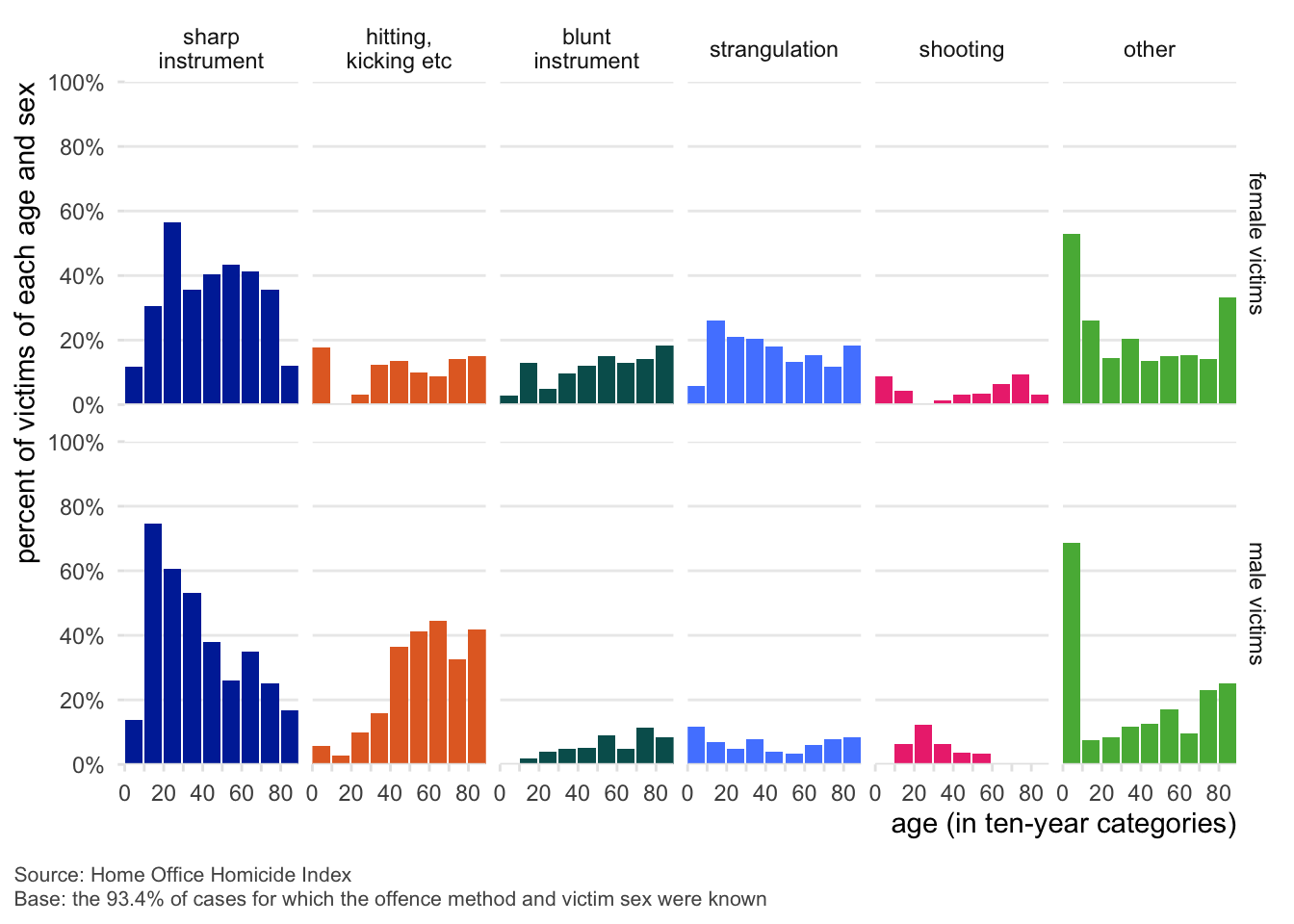
Figure 3: Homicide methods by victim age and sex
A grouped bar chart shows the percentage of homicide victims by age and sex for different methods of killing in England and Wales, based on data from the Home Office Homicide Index. Age is grouped in ten-year categories along the x-axis, while the y-axis shows percentage of victims within each age-sex group. Separate horizontal panels compare female (top) and male (bottom) victims. Each panel includes six sub-charts for homicide methods: sharp instrument, hitting/kicking, blunt instrument, strangulation, shooting, and other. Male victims are more often killed by sharp instruments, especially younger males. Older males are more often killed by hitting/kicking. Female victims are more evenly distributed across methods, with strangulation showing a higher share in younger women. “Other” methods are more frequent in the very young and elderly for both sexes. Chart notes indicate that 93.4% of cases had known victim sex and offence method.

Compared to White victims, Black victims were 4.6 times more likely to be killed by shooting and 1.9 times more likely to be killed by sharp instrument, while Asian victims were 2.5 times more likely to be killed by shooting.

Homicide methods varied with circumstances

The methods used in homicides varied between the different Home Office homicide sub types (Figure 4). A particularly high proportion of homicides of male victims up to age 25 killed in a public place were committed with a sharp instrument such as a knife. Use of sharp instruments was much less common against female victims of non-domestic homicide aged 16+ and victims under 16 killed in a non-public place.

Strangulation was disproportionately commonly used to kill female victims of domestic homicide, but not male victims of domestic homicide. Strangulation was also disproportionately often the method used to kill female victims of non-domestic homicide aged 16+.

For female victims of non-domestic homicide aged 16+ and victims under 16 killed in a non-public place, the largest number of homicides were recorded as using the method ‘other’, which suggests a possible gap in our knowledge of the methods used in these types of homicide.
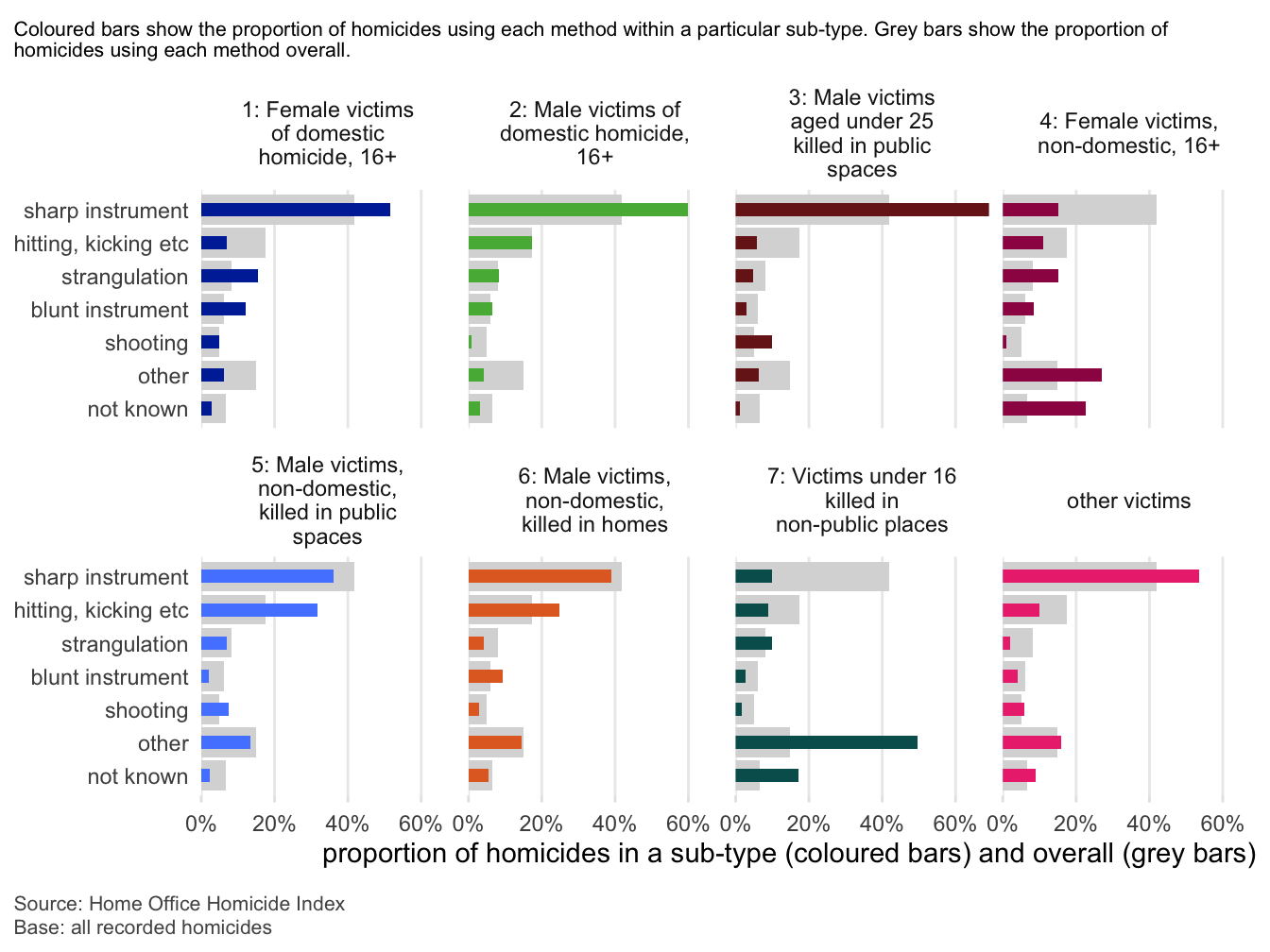
Figure 4: Proportion of homicides using each method by Home Office homicide sub-types
Bar chart showing proportions of homicide methods across eight sub-types of circumstances in England and Wales, based on the Home Office Homicide Index. Each sub-type is displayed in its own chart with coloured bars representing the proportion of methods used within that sub-type and grey bars showing overall proportions across all homicides. The sub-types are: (1) Female victims of domestic homicide aged 16+, (2) Male victims of domestic homicide aged 16+, (3) Male victims under 25 killed in public spaces, (4) Female victims, non-domestic, aged 16+, (5) Male victims, non-domestic, killed in public spaces, (6) Male victims, non-domestic, killed in homes, (7) Victims under 16 killed in non-public places, and (8) Other victims. Methods include sharp instrument, hitting/kicking, strangulation, blunt instrument, shooting, other, and not known. Sharp instruments are the most common method in most categories, particularly among young males in public spaces and non-domestic male victims. Strangulation is more common in domestic homicides, especially among female victims. “Other” methods dominate in cases involving children under 16. Grey bars indicate sharp instruments as the most used method overall. Data highlight notable variation in homicide methods by context and demographic group.

In summary

Almost half of homicides in England and Wales involve sharp instruments, with most of the rest involving unarmed methods such as strangulation or hitting, kicking, etc. Firearms homicides are very rare, especially compared to other developed countries.

Homicide methods vary according to the sex and age of the victim. Male victims are most likely to be killed with sharp instruments, especially when they are young. Older men are more likely to be killed by hitting, kicking, etc. Female victims are more likely to be killed using a blunt instrument as they get older. Black and Asian victims are more likely to be killed by shooting, and Black victims by sharp instruments.

The next post in this series looks at hotspots of homicide.